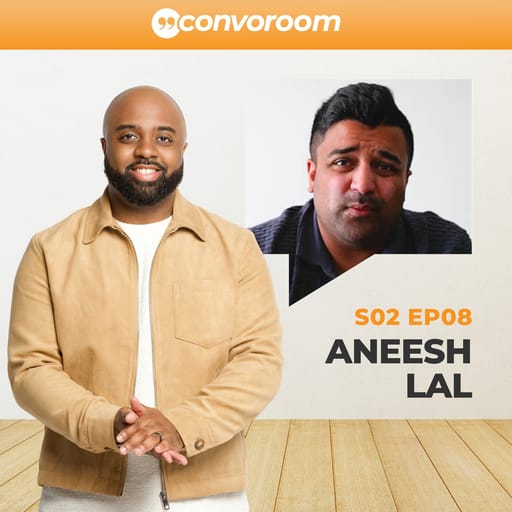
Transcript 0:00 What's up, family? We got Anish Lal. Hopefully, I'm saying your name correctly. Boom, all right, 'cause I've only seen it written. He's a, a new friend that I, uh, have found on LinkedIn. 0:12 He is the founder of The Wishlist Group. He is representing some names and faces, of course, that you might know. 0:19 But this whole session and this conversation is about you as a creator and how you can build that bridge from solo creator to creatorpreneur, and when it makes sense to talk about representation. 0:30 Because, of course, everybody might like the idea of, "Man, like I, I need a manager," but I'm sure maybe from the manager's perspective, they're like, "I don't want a headache." 0:41 [chuckles] So in order for us to make sure that we are engaging at the right time, we're gonna make sure that from the manager's perspective, we see what i- what are they looking for, so that way when they engage representation, things are exponentially better, and they don't find themselves hitting roadblocks. 1:00 So without further ado, Anish Lal, welcome to Combo Room. Thanks for having me, Mark. I really appreciate it. I think this is, uh, it's a big topic. I get asked about it all the time. "When should we get a manager? 1:11 When should we get an agent? What's the difference between the two?" All those types of things, I'm happy to unpack it today, whatever, whatever you wanna talk about. Awesome. So first, I wanna hear about your passion. 1:21 How is it that you got into this space? 1:24 So then that way people can even understand before we get to the work, like who is the person behind the scenes that, that makes all of these opportunities hap- like what kind of personality do you have? 1:36 What, what, what drives you to do this kind of work? No, I appreciate it. We have about fifty B2B creators. We're running about a hundred and thirty campaigns a month with a hundred B2B brands. 1:45 We just hit the five million dollars earned mark for creators in about twenty months or so. And the B2B creator side within the creator economy is probably the fastest-growing segment, in my opinion. 1:57 I'm pretty biased and bullish [chuckles] on it, but that's where I've seen the biggest growth. All the other channels, you take a look at Instagram, YouTube, TikTok, they're, they're very saturated on the D2C side. 2:07 Think about LinkedIn and B2B, where Instagram was like ten years ago, right? But it won't take ten years for it to, to learn and develop. It's gonna grow really fast. So that's sort of where we're at right now. 2:20 In terms of what drives me or the type of personality necessary to make this happen, uh, this is not a nine-to-five job. I am a shoulder to cry on, a business strategist, and an agent all wrapped up into one. 2:33 My creators have told me their, their biggest dreams, everything from when they're starting to plan a family, all the way down to, "I want that beach house in Costa Rica," right? And everything in between. 2:43 And then my job as the agent is to make that a reality. Uh, it starts with brand deals, but then it goes into learning about their business goals. A hundred percent of our creators are not full-time creators, right? 2:53 They, they're subject matter experts. They run their own businesses. They're full-time employees. So we-- we're, we're always trying to find that balance of the creator and the preneur on both sides of the equation. 3:04 So I'm happy to answer, uh, answer any questions you have on that dynamic, of course. Let's talk about the initial connection. 3:11 What catches your attention in terms of a creator that you're like, "Hmm, this is somebody I wanna work with"? Yeah. 3:18 I think for the B2B lens or any creator, uh, that I've come across, when you're talking about, let's say you're doing your own brand deal, or you're talking about a specific technology or platform or something like that, if you can make someone feel something, like a human emotion, like, uh, comedy or some sort of like, "Oh, like that's gonna suck if I don't do something," if y- if, if I can see that someone's making me feel instead of listing out some boring listicle, I like to think that, okay, this person has the potential to humanize a B2B brand, and that is a very difficult thing to do. 3:52 In my world, the c- you know, no disrespect to the brands we work with, I love them, they keep the lights on, but they- they'll agree that it's not the sexiest place to be, talking about data and CRMs and operations of revenue and landing page this. 4:06 It gets to a point where the person who's being that ambassador, that creator, needs that skill set of charisma, but in a very sophisticated way. It's not just what they look like and what they sound like. 4:17 For o- like other platforms, these folks need to be able to communicate the benefits of a product, but storytell it in a way that makes people feel something. 4:24 So that's the first thing I look for right away, I'm like, "Wow, that person storytold about this data platform that no one ever heard of, and now I'm gonna remember that data platform because that's linked to an emotion that I have." 4:36 And that's, that's a, that's a very quick entry point for me. I should probably pay attention to that profile. Now let's double-click on that. You see good storytelling. You see charisma. What are the... 4:48 Do you look for certain things in terms of their business, in terms of their metrics, in terms of just even the intangibles? Like what are you looking for outside of the storytelling? Absolutely. 5:00 We have a three C model, which anyone can steal here. It's charisma, credibility, character. And you'll see with me, Mark, I got a framework for freaking everything. 5:09 It's the only way I stay structured with fifty different personalities that you manage. The three Cs, I already kinda went into the charisma one a little bit, right? 5:16 Do you have the ability to storytell, garner attention? What are your metrics like? Do you have a strong engagement rate? Every platform has their benchmarks. 5:24 For us on LinkedIn, I like to see a engagement rate of at least point one six to point three two, like that's average, depending on your, your vertical and niche. 5:34 But for, for me, like just the size we've become, you know, we normally need like eighty, ninety, even a hundred thousand followers to just have a conversation. But then your engagement rate in that does matter. 5:44 Like if you have sixty thousand followers, but your engagement rate's through the roof, like-1.6%, 2%, whatever, I'm, I'm gonna have a conversation with you. Like, you're clearly crushing it. 5:53 And then we're looking for credibility. 5:55 So because of my background in media, sales, community, LinkedIn, just seeing what's working with 130 campaigns a month, I'm able to take a look at your content and be like, "Is there depth here, or are you just copy and pasting or giving me AI slop?" 6:10 Like, we've gotten pretty good at the credibility piece to see right away, like, is, is there original thought here, or are you just an AI junkie, right? Um, and a lot of people curate content. 6:20 There's nothing wrong with that. I don't want the curators, though. I want the creators, and there's a difference. 6:25 Some people are really good at, like, taking sample article X and all this Y, and then so and so did this, and Anish said that, and Mark said that. That's okay, but I don't need a billboard. 6:35 I need the per- I need the person creating the dots, not the person connecting the dots. That's the big thing. The bar. Right? That's the bar. And then that's the credibility piece. 6:44 The third piece, this most difficult thing, to your point, the intangibles, the, the character. At the beginning, this was one of the hardest thing for me to do 'cause nobody knew who I was. 6:52 Nobody would take my phone calls. It didn't matter. Today, because of who we've become and who we work with, the number of people... 6:59 Like, Mark, let's say you wanted to sign up, I'd be like, "Cool, I can make four phone calls and learn everything I need to about you behind the scenes in this ecosystem." 7:08 And you'll be shocked the number of people who are credible and have the rizz but don't win in the character department. It's scary. Wow. I can't go into stories 'cause, you know. 7:18 I mean, I'm sure people wanna know, but I'm sorry, guys, can't, can't reveal. But I've had really good people on paper who, you know, after a couple drinks when they get off stage, and people talk. 7:28 And when I hear from four or five different groups of people who don't know each other, "Stay away from so and so, man. Like, difficult to work with, does some creepy stuff," blah, blah, blah, all those things matter. 7:40 So we actually had a policy right from the beginning, in order to be a Wishly creator, you must be referred by someone on Wishly, and that already tells me, like, if no one on my squad is gonna vouch for you, already something's up, right? 7:54 So that's just something that only one person, we made an exception for one person f- in that, you know, that role ever, but 99% of our talent has been referred in. That's some good stuff right there. 8:04 I, I love the three Cs. I wanna know for you, in terms of expectations that creators should have, it seems like you work with a benchmark of people who clearly they've got a level of engagement. 8:18 They have an audience of some kind. What do the deals look like at various stages? Because I think the range seems to be all over the gamut. Crazy. 8:29 But I do think that for creators and brands to operate in good faith and have a level of trust in those early engagements, sometimes you do have to get over the hill of, like, am I being taken advantage of, or is this competitive, or we don't wanna come in too low if you're coming from the brand's perspective, and we don't wanna be insulting, but our budget is our budget. 8:52 What do you feel like is a, a good metric to use in terms-- or I won't say metric or a good, uh, baseline to use for each stage of growth? How should creators be looking at the money, per se, when it comes to deals? 9:07 Gotcha. Yeah, I'll give you, I'll give you the... Everyone listening, this is transparent. Like, I study this data inside out 'cause of, uh, everyone we rep. 9:14 Now, we normally rep the top voices or category leads, but we are also privy to what some of the smaller and nano creators are earning. 9:23 So I'd say from the zero to 30,000 mark, this is the law of averages, folks, so take it with a grain of salt. There's a lot of creative deal-making to be had. Um, you're looking at anywhere from 9:34 $1,000 to $3,000 for a post, depending on who it is. Then the next octave above that, I'd say, is your 30 to, let's call it 60,000, 30 to 60,000 creator, uh, follower. You're looking at the next level, like 3 to 5K. 9:50 And then at the 70 to, uh, let's call it 100,000 mark, seeing, you know, let's call it 4 to, 4 to 6 on average. 9:58 And then 100,000 plus, let's say 100 to 200,000, 100 to 250 even, you're looking at 5 to 8, and then it goes up like that. I've got some folks who have 500,000 followers who get paid 7 to 9K just to post. 10:12 I've got a creator who gets 25K for a post. It depends on who they are in their, in their niche as well. So supply and demand applies to the whole gamut. 10:23 So if you're, like, the only ABM marketing person, and there's, like, four of you, let's say you're one of four, and you're, like, the go-to of the four, you're gonna command a higher price irrespective of your follower count. 10:36 Mm. And then if you're... You know, there's, I'd say the sales influencer is probably the most common nowadays on LinkedIn in the go-to-market space. 10:47 That whole vertical is seeing a bit of a reset in pricing because of the sheer volume. So if you're, like, one of the four practicing CROs who's also a content creator, you get a special rate. 11:00 If you're an individual contributor, different story 'cause there's honestly 100 of you now, right? So there's, there's all those dynamics at play, but that is the average. 11:08 I wonder for someone who's trying to find their niche, find their, their area of dominance, where do you feel like the future of B2B influencers, thought leaders should be focusing their attention? 11:25 For finding the niche or which niches will be the best? Um, well, you know, I, I, I'm hesitant to just chase a bag because I feel like the trends are what they are, you know? 11:36 But let's just say if you need to find a place to anchor, like, let's... 11:41 For a lot of folks who are corporatepreneurs, and they might find themselves needing to focus on a topic to then perhaps branch out later.Where would you advise early-stage creators to focus their content and all of their attention right now? 11:58 Yeah. The... My rule to my creators is the closer you are to the money, the more money you can earn. 12:04 So if you're talking about go-to-market practices like sales or marketing, the technologies that those brands and technol- technologies wanna invest in are gonna be higher ticket than let's call it job hunting. 12:16 I'd say the HR career space, uh, is probably the least lucrative in brand deals. 12:22 You're looking at people with hundreds of thousands of followers on LinkedIn because it's the number one topic, but you also have the most cre- most creators on LinkedIn outside of the go-to-market space are talking about career, how to find a job, and personal branding. 12:37 Here's how you can grow on LinkedIn and your whatever. Those are the most difficult to monetize, predictable revenue-wise, the most difficult to monetize. 12:46 [clears throat] You're gonna get a lot of one-off deals, but the brands that wanna monetize in that sector, for example, they're going after job hunters, and typically, job hunters don't have [chuckles] a lot of discretionary income. 12:56 So you're looking at like resume platforms and things like that. 12:59 Like, it's not, it's not gonna be a big mover like, you know, giant CRM technology company that's talking to someone with established P&L on sales and marketing. Those ticket prices will be higher. 13:10 So if I'm a creator, and I'm thinking my subject matter expert, think the closer you are to the money, the more money you will make. 13:17 Something that I'm, I've seen, and I don't know how true this is, so you're gonna help me dis-dispel this myth- Yeah. Yeah... 13:23 is it fact or fiction, moving to more community-based and in real life experiences, do you feel like that's a trend that creators need to pay attention to and really dial into? 13:36 Even, I would say, to the point that they should be thinking about hosting their own. Yeah, absolutely. I'm a hundred percent. I drank the Kool-Aid. I think events is where it's at. I'll tell you why. 13:46 So if you look at the stats, just objectively, last year, one to three percent of the creator economy made six figures. This year, that number is expected to double, if not triple. 13:56 So all this means is that we have way more people and way more money coming into this space, whether you're B2B or not. This is for all, the entire ecosystem. 14:05 So when I take a look at the volume of B2B creators coming in every year, the volume of agencies being built, the volume of dollars coming in, this is now going from creator economy to just economy, right? Hmm. 14:18 And when that happens, and you hit that tipping point, you are now competing with every other creator in the game. 14:24 So the only way to stand out, like any other industry, any other thing that you might be selling pa- in the past or whatever, this is the same, same market dynamics apply to the creator. You're now inventory. 14:35 I hate to say this, but you're now inventory competing with other inventory. I'm talking very like, you know, profit and loss thinking. 14:41 The CFO signs off does not give a sh- about you, cares about how many impressions reach my goals, all that pure business. So in order for you to stand out and humanize yourself, where else are you gonna do that? 14:53 In a scroll, feed, or in person? Mm-hmm. A lot of these brand decision-makers, they fall in love with people in person 'cause we're human beings. 15:04 So I think it's so important for creators to get out of their comfort zone, go meet in person, get off, you know, behind the camera, in front of the camera, and go actually meet some people. 15:13 That is where the business is done today. Mm-hmm. I really wanna take somewhat of a strategist role real quick. 15:20 For the people listening, early-stage creators, uh, and I think I'm one of them, I've been chewing on the idea of doing some in-person meetups, and I think some of what makes me hesitant is the o- it's, it's just easy to think, "Oh, I'm gonna do it virtually." 15:37 There's, there's no risk financially. Oh, it's just internet [chuckles] and maybe some ads. The moment that you decide to book a venue, I don't know what it is, it's like the fear of God comes in. 15:47 [chuckles] Talk to me about taking risks as a creator to then play at some of the, uh, higher levels, for lack of a better term. 15:59 You know, um, because I think inherently, like you're going to have to get comfortable with risk, and I think it can be a little counterintuitive for people who are almost, especially, you know, you're keeping your full-time job because you're risk-averse, you know? 16:14 So- Right... how do people navigate doing that? Like taking that risk and, and moving toward... Like making some big swings on whether it be in-person events- Mm-hmm... 16:24 even going to conferences on your own dime to make those connections, you know. Uh, speak to that. Yeah. Honestly, I wish I had like a big poetic answer for you. It does come down to mindset and risk versus reward. 16:37 This is not a new concept to the human race. Uh, I... 16:40 You know, you think any other industry, like let's say you're an individual marketer at a company or a salesper- a salesperson or whatever role you're thinking about, those that invest in coaching for that function, no matter what you do, those who get the extra skills, those who go spend their weekends taking courses instead of watching Netflix with whatever job you do, those who go to the gym, for example, and those that don't, like you can put it any single part of life. 17:05 Those who invest whenev- others stay constant, you're beating the inflation, right? 17:10 If you look at it metaphorically, experience in a job is inflation, and those that get coaching and all those things, that's how you beat it. The creator economy is the exact same. 17:20 We-- The good news is we now know there's a lot more money to be made here. Only six percent of creators are making six figures. 17:26 There's a lot of money here, folks, enough to go around right now before things get really bloody. 17:30 It's one of those things that if you want to step up, and you want to get in front of the right people, you are gonna have to spend, you know, put some, put some skin in the game. 17:38 So that comes down to your own ability to manage finances. How much do you have in that war chest? Do you have a lot of inbound leads coming in as a creator? 17:45 Um, do you have certain brands that you can talk to that speak to the, uh, you know, other creators or whatever your niche is to sponsor some of those events? 17:55 And that just shows you how entrepreneurial you really are.The only winners in this game are gonna be the ones who put the skin in the game. I hate to say it, but it's the truth. Mm-hmm. 18:03 I think that's sobering advice, and I think it's important advice to consider because at the end of the day, I love how you say it's not just the creator economy, it's, it's an economy. It's its own thing. 18:15 And- It's too big now. Yeah, you, you have to participate, and you have to... You just have to embrace the fact that you're going to compete. Yes. 18:24 It's not a, just a passive thing that you can just do as a hobby and reap the benefits of someone, to your point, who's putting the reps in. Exactly. Exactly. It just-- It, it's the definition of insanity, right? 18:34 It's, it's like I keep doing the same thing over and over again, nothing changes, but I see so-and-so crushing it. 18:40 Well, you need to also understand so-and-so put in the, the dollars and the time to fly to Vegas to go to Creator Economy Live or scrape their way to sleep on a couch at Canne Lion. 18:49 Like, the amount of sacrifice I've heard behind the scenes of the creators who make it, and for those listening without seeing me, I'm quoting that, "make it," they don't see the grit, the, the, the anxiety, the horrible DMs, and if, you know, you're a woman in this space, you know, the, the creeps online. 19:07 They don't see all that. They just see that, oh my God, this person got a three-minute interview with Drake. What? 19:12 Like, they, they don't, they don't see everything that led to that moment, and it takes work, a lot of work. Can you talk about the financial investment? 19:23 Because I think sometimes we hear about the deals, but really you've really even opened up my eyes to maybe calculate the cost of doing business, and so what type of investment do you feel like creators need to keep in mind? 19:38 Yes, we talk about gear and, you know, all that kind of stuff, but, like, for re- like, with your clients, what do you see as a, a common through line that they are investing in to make sure that their business is able to thrive? 19:52 Yeah. The smartest creators I know are putting their money into two things. One is the top three events for their niche, not in general. Uh, you can go to Creator, you can go to a Billion Follower Summit in Dubai. 20:04 You can go to Canne Lion. You can go to VidCon. You can go to all these things. Those are very, very large places, and unless you already have connections as to what to do there, you're gonna get lost. 20:14 You're better off investing in micro-communities where you can become a bigger fish, have intimate conversations, and get connections. 20:21 You're better off investing, going to those types of things like Creator Economy NYC in New York with Brett Deudshevsky and that squad. Great starting ground. Great mid-tier ground tier, and even top-tier. 20:31 We have a lot of top-tier creators that go to that event as well. Um, they host events about once every other month. Like, go to those. Um, the second place that people invest a lot in is in, um, channel diversification. 20:46 So if I am on just Instagram and I have all these shorts, it's like, okay, how do I activate my super fans? And that's usually through a newsletter or a long form YouTube channel or something else. 20:58 The reality is nothing works on everyone. It's the truth. Some people love to read. Some people love video. Some people love short form text. 21:06 You have to invest in making your content flywheel a reality, and sometimes that takes money to get your YouTube graphics person up for your thumbnails now, and you weren't doing that before, or getting someone who's a better writer than you to help you take your best video content and make it a newsletter. 21:23 Because nothing works on everyone, investing in chann-channel diversification and strategy, very big deal 'cause then you're not beholden to one person's algorithm. Do you feel like there is 21:34 a golden rule for channel diversification, e-especially with someone who's handling representation? You talk about the engagement rate. Is there a channel that you prefer over others? Ooh, you're gonna get me in trouble. 21:48 Um- [laughs] I'm LinkedIn first. I'm bullish on LinkedIn. I just think that's the place to be if you're B2B. 21:55 I do believe that long form YouTube is where you're gonna nurture and activate your, your loyalists, your super fans. 22:02 I always want creators to think about, they have their general population, they have their repetitive population, people who, like, get familiar with you as they go through the scroll. 22:11 Then you have the people who's like actively seek you out, and then you have the people who will just, like, die for you. They feel like they know everything about you. They'll, they'll subscribe to your newsletter. 22:18 They'll come up to you at conferences, say, "Can I get a picture? Oh my God, your content changed my life." There's a couple stages there for your creators. 22:26 For, sorry, for your followers, and if I'm-- if you're a smart creator, you're thinking, "How do I activate more super fans?" They're the ones who are gonna buy for you. 22:33 They're the one-- They're the ones who are gonna connect you to other people. They're the ones who are gonna ask you to come speak at their events. 22:38 They're the ones who are gonna put their neck on the line to get you stuff. So how do you activate more super fans and take care of them? If your channels are not doing that, that's where you need to activate. 22:48 I'm curious, do you feel like creators should be monetizing early on when it comes to digital products? 22:56 And if yes, then I would really like you to talk through pricing because I think that that is something that creators, especially I've noticed female creators, chronically undersell or underprice themselves. 23:12 And I think that someone like you could really give some level of authority and confidence to... 23:18 Obviously, the quality of the product matters, but just a general baseline, like, where should people be thinking of pricing their digital products and their offers to their communities? 23:30 This one is super complicated, so I'm gonna break it down in, like, a baseline, and then there are nuances to this, folks, so bear with me. Um, I usually get, like, digital products, courses, communities, cohorts. 23:43 Those are the big, big areas that you as a creator can monetize. You can build courses. You can h-host communities and have those weekly, you know, group coaching calls or whatever. Uh, and then you have your cohorts. 23:55 It's, like, more project-based. Like, I'm gonna bring ten people on and do an accelerator and then keep doing that twenty times in a year. And then you have your digital products. So once you have your... 24:05 That's the first paradigmThe second matrix to sort of think about is DIY, do it yourself, done with you, done for you. These are the three dimensions of how a creator can spend time with their community. 24:19 The do it yourself is like, "Here's my package, here's my playbook to do this. You can buy it for..." I've seen anything from ninety-ni- you know, ninety-nine dollars all the way down to twenty bucks. 24:30 It just gets people into your, into your realm to, to test you out. 24:34 Then you have the done with you, which is the creator, uh, gives their time to a whole group of people, and there's maybe some supplementary courses and videos you can watch on your own, and then I'm here to answer any specific questions. 24:48 Ninety-minute call every other week. I'm making that up. Everyone has their own offering. Those usually go for anywhere from two hundred bucks a month to a thousand bucks a month, depending on what sector you're in. 25:00 And the bigger the creator, the more valuable... Like let's say you're doing like financial planning or whatever, like those types of things go very, very expensive. Sales training goes very, very expensive. Marketing... 25:10 Again, the closer you are to money, the more you can charge. Same rule applies here. And then you have the done for you or like exclusive one-on-one. 25:19 You're getting one-on-one time with, with the GOAT, the creator, and again, the bigger they are, I've seen those packages go from anywhere like five hundred bucks an hour to fifty thousand dollars an hour. 25:30 I've, I've seen those numbers. It just depends who you're speaking to. 25:33 But that's when you're putting out your strategy to market these things, there's usually one offer in each of those three dimensions, and then that digital product is what we call a down sell. 25:44 So people usually get that middle offer. It's like, "I can't afford, you know, that much per month," or whatever. "All right. Well, how about you start off with this course or digital asset for fifty bucks?" 25:54 And then the likelihood of people upgrading and up-upselling comes from that pool of people who already spent money with you. 26:01 So that's a quick two-minute, three-minute breakdown of how most creators think about digital products. Now, we were c-cutting out just a little bit, but thankfully, because of Riverside, I think we're recording locally. 26:15 But needless to say, there are so many gems that you just dropped within this particular section, I think that it cannot be understated. 26:23 You said there's a whole lot of nuance here, but I think it's so good the way you just laid out. You talked about frameworks earlier, and you gave us some good- Okay. -frameworks to think within. Yeah. Yes. 26:34 And I think that is gonna be super helpful for people to at least pick one, I think this is even the spot that I'm in, pick one area to conquer. Yes. 26:46 And then if you see some traction or you feel like you need to pivot, then okay, let's, let's move. Maybe we're starting off with the DIY. 26:54 Let's see if we can get some people to respond to these playbooks and respond to these lead magnets, and then we can do, you know, maybe a one-to-many approach. Build a waitlist saying, "Hey, I noticed you bought this. 27:08 Clearly you have a problem to solve in area one, two, and three. It turns out there's fifty of you that feel this way." Mm-hmm. 27:15 "I'm starting a cohort of fifteen people that I'm gonna personally walk through, through my four-week boot camp." Made that up, but that's an offer. 27:23 You know, um, I think I want to at least touch on, because I think now it's inescapable that alignment is so important for creators. 27:35 And before we go, I, I wanna know like, is there a conversation that you have with any of your creators perhaps about balancing their authenticity, but being clear or maybe even ambiguous for some about their allegiances? 27:54 One I can think of is hot button obviously right now politically. I mean, we're looking at, you know, you're from Canada, I'm from the US. Right. Hockey teams going through it right now. 28:04 But I think outside of that, like we look at some of these activations that have had both success and blowback for some. 28:13 You know, it may not be as volatile in the B2B space, but I wonder, are buyers evaluating the brand affinities or, you know, checking who you follow and, you know, checking what you're commenting on before they decide to align with a creator? 28:30 Every day. Every day. Any, any brand that's doing due diligence will look at all your channels, by the way, especially if you're doing like a multi-month long-term strategic deal. 28:40 So just because I'm pitching someone's LinkedIn, I get this all the time, "Hey, so and so's Instagram says like... Oh my God, what did they just say? You can't be-- We can't be... That's not brand safe." 28:50 So some creators will build out their online personas to optimize for money, right? They won't... They'll be fairly neutral on polarizing topics. 28:59 Others who are very passionate about specific causes, you know, they, they'll say what they say, knowing they're gonna lose a bunch of people, but they're also gonna embolden the other half. And that's a very... 29:10 You know, it's a very big thing in the States right now, right? Depending on your political stance, your religious stance, your everything stance. 29:16 There's certain people who are like, "That's my person, that's how I feel. I don't care what people say." And then, "That's my... That's no longer my person. They don't represent my values." 29:25 And the more you play to the, the pol-- the more sides you take, you do get deeper with the group that's already on your side, but you do also alienate. 29:35 There's certain brands that will spend with you and certain brands that won't. 29:39 There's certain no-go topics like, I think race, religion, you know, anything like that, the mo-moment you hit any of those topics, generally brands will be like, "We're not, we're not supporting you either way. 29:49 No matter whether you're going left or right, doesn't matter. We're just not touching that." Do you feel like there is... 29:54 I, I like the mantra that you talked about, the closer to the money you are, the more money you can make. 29:59 Is there a mantra that you give to your clients and/or creators that stick with them before they decide to post something? Or is it just kinda like, "Hey, this is just... This is the lay of the land. 30:12 Do with it what you will"? It all comes down to their overarching goal.So some people create contact for impact. Some are creating conta- uh, content to pay the bills. 30:22 Some are creating content because, you know, something new happens in their life. It started at impact. Most creators start with that impact, and that's how they amass their following. 30:31 But then they get married, then they have kids, then they have real-life bills and expenses that come up. Um, and then at that point, you have to make business decisions. 30:40 And where you tread that line really comes down to your personal goals. It's like, if I want that beach house in, in Costa Rica, 'cause there is a life, there is a lifespan of how long you can be a creator, right? 30:52 There is a lifespan to it. I'm-- It's like, "I, I only got five years left in this game, two years left in this game. I'm getting tired of recording content every single day. I got kids, now I got this," what-whatever. 31:01 Um, at that point, you gotta make some business decisions for yourself. It is a very real conversation that creators have. I call it the creator's conundrum, right? And you, 31:12 uh, you are affectionately called the Jerry Maguire of LinkedIn. So I'm curious, as any representative of a pro athlete, you talked about that lifespan. I really feel I have not heard people really speak to that. 31:25 Give somewhat of a synopsis of what you feel like is an honest conversation around the lifespan of creators that you feel like people are not having. Yeah, the, the, the creative, the creator burnout is real. 31:37 Like, you're constantly on. You're constantly on. So when you look at careers, right? Like, you might work a nine-to-five, you go home, you get to recharge, rest. That's the normal life. You know, we all did it. 31:48 We've all done it. 31:49 But when you're a creator, you're constantly in the DMs, you're constantly looking at your numbers, you're constantly comparing yourself to others, you're dealing with insecurities, you're dealing with rejection, you're dealing with that polarized topic stuff we talked about, like, "I can't believe you didn't say this." 32:03 Mm-hmm. "I can't believe you did say this." Like, you're always damned if you do, damned if you don't. Um, then there's the travel, the brand deals, the, the renewals, lack of predictable revenue. 32:14 People think it's like a glamorous profession, and there are parts of it that are super fun and sexy, right? But there are a lot of things that are behind the scenes that do wear on you. 32:24 And as you get older in life in general, you take on more responsibilities, right? Like, typically, if you get married, mortgage, all those things. All those stresses become yours. 32:34 And if you're not-- if you don't have the system in place to deal with all that, to manage all that, the burnout is, is very real. And people... 32:42 You'll see, like, you'll see people post after a couple years, they're like, "What happened? Oh, I, I haven't seen you in a minute. What happened?" 32:48 And then as you get older, this is something I talk about with creators all the time, they're like, "Anish, if I don't post, someone's gonna take my spot." Mm. 32:55 "There's only so many people in this game at this level, in this niche, in this niche or niche, whatever, that, you know, I gotta, I gotta hold the throne, otherwise it's gone, and I worked so hard and long to build this category. 33:09 I'm not about to give it up." Mm. That's where the business... You know, you gotta be smart with the business. Where's your money been going? How are you gonna build passive income streams? 33:17 How are you gonna scale your preneur side? Not the creator, the preneur side. Mm-hmm. How does the preneur side start working for you? Mm-hmm. 33:26 And that's something a lot of creators don't think about, and good managers will always think about that, saying, "Hey, like, you're making all these decisions, but how are you building wealth for you and your family? 33:35 Hey, that one deal, yeah, it seems like it's great 'cause you made a f- couple Gs, but, like, it's gonna cost you here, here, and here. Screw it." Mm. Those are things that I talk about with my creators almost daily. 33:46 Now, I wanna talk about legacy as we wrap up. I wanna hear about, like, what you hope your team, your family, people you work with, what they say about you, uh, when you're not in the room. 34:00 You're still a young guy, so we're not gonna act like- Yeah... you know, we're talking about this when you're, when you're, when you're dead and gone, all right? 34:06 But that, that piece of legacy, but also, I just love how you open that up about, like, legacy for creators, because I really feel like, you know, if you are a songwriter, you know, your catalog has the potential to, I mean, even have a bump even after you pass away and people rediscover your music and all that. 34:27 Right now, creators, particularly if you're on the content side, I would imagine when it comes to, you know, B-- um, and how information changes, so it's not like people who bought a course fifteen years ago are gonna try to rediscover it and watch it again. 34:40 [chuckles] Maybe. Um- Who knows? Depending on the topic. 34:44 But how can creators start thinking about ownership and think about ways to develop IP, and, and is there something that you feel like is something that's untapped, that you feel like creators should just be paying attention to and investing more in to create that stream of revenue? 35:03 Man, there's so many ways to unpack that question, and it all does come down to your skill set, your subject matter expertise, and what your, what your followers and super fans value you for. 35:14 Not know you for, but value you for. 35:16 If the value, the thing that you're valued for is solving problems beyond a quick clip or it's creating a lifestyle impact on others, the chances of your legacy being deeper than just your video is higher. 35:30 So I'll give you an example. If one of my creators, let's say they're a negotio-- they're giving you a negotiation tip. Next thing you know, you're negotiating your next promotion or raise. 35:40 That promotion then gets you access to one, two, three, and you're like, "Oh my God, if it wasn't for Mark, I would not be here today." 35:47 When you have that level of impact, where you're thanking the creator for something that's now rippled effect into your life and your abili- your ability to provide for others, that's a tipping point that's very emotional. 35:57 It's like they, they feel like they have an allegiance to you now, right? If they light the beacon, I'm coming, right? There, there are levels of that parasocial relationship. 36:06 So the more of that emotional tipping point you can create where people are thankful for the advice, they're thankful for the motivation, they're thankful for like, "I'm so glad Mark shared that story about XYZ that transformed his life. 36:19 He got super vulnerable, he was emotional, but shit, I was going through that too, and I needed that because I was in a dark place." 36:26 It doesn't have to be that dramatic, obviously.But it can be from there all the way to the negotiation professional thing and everything in between. 36:33 The moment people feel emboldened and be- uh, to your, to your, your methodology, your philosophies, where they're telling their friends and family like, "Yo, if it wasn't for so-and-so, I'd be game over," that's when your legacy becomes bigger than your content, and that's the way I encourage creators to think on the impact side. 36:50 Like, how can I, how can I tell a story or a tip or whatever advice or whatever that could actually be taken and spoken about when I'm not in that room? Mm-hmm. 37:00 And that's the, that's the most difficult thing for a creator to do, of course. That's why it takes so long. It's consistent. There's a whole bunch of things you gotta test. 37:08 But once you unlock that, I think the legacy becomes bigger than you, and that's the piece I think that a lot of creators, they don't think long term on those types of things. 37:16 They look at their immediate likes and engagement, and then they have a dopamine hit- Mm-hmm... or a crash, and uh, they're just thinking about the next reel or what's trending now. 37:25 But I don't think many are giving thought to the legacy. So what... I feel like we're fighting this connection, but I, I gotta hear you talk about your legacy and what you want people to say and experience from you. 37:38 Yeah. And what you want them to say about you when, when you're not in the room. I just... There's two things, right? For me, I just want them, like, like does Anish have my back unconditionally? Mm. 37:48 I think that, that's a big one because that, that, that's what creates the trust and, you know, respect and my reputation in the market, sure. 37:58 The second thing is like did he, did he materially impact my life in one of those ways that I just talked about? Did he allow me and my family to do something that we didn't think was possible? 38:09 Did he help me es- escape my YouTube nightmare to live life on my terms? And I'm not naive to believe that all 50 will stick with me forever. That's ridiculous. There's no way. Everyone's on their journey, right? 38:21 Maybe one day somebody gets big enough to join one of the more established talent agencies or you never know, right? All those things, and I'm just like, "Cool, man." It's a... 38:30 We all have to graduate and figure things out at certain points, but if I can be a small part of that journey- Mm-hmm... 38:36 and they remember me as someone who had their back and actually did what they said, wasn't a transactional guy, I'm happy with that. 100%, man. Thank you so much for taking the time to have this conversation today. 38:48 We powered through the s- the sketchy Wi-Fi from- Oh... 38:52 uh, being on the road, and uh, I just thank you because for me, I find that sometimes when you push through the obstacles and you just show up, sometimes they are the most rich experiences. 39:06 And uh, I think even in this season, I'm learning, the season of the show- [laughs]... I'm learning that you just gotta power through and show up. And man, you showed up today for us, and I, I thank you so much. 39:17 I think this is one of the most information-rich episodes, but it's also one of those guiding posts that will really help people align their careers with where they're trying to go, and it's not a pie-in-the-sky approach. 39:33 I f- I feel like- Yeah... you've really given some actionable steps that people can take, so thank you so much, Anish, man. I, I sincerely appreciate it. You are welcome anytime in the convo room. No, I appreciate it. 39:46 Thanks for having me, man, and I, I love the questions. I love, uh, the balance between tactics and mindset. Y- and you kinda need both to win in this game. So I, I really appreciate it. Thank you, Mark. 39:56 Well, until next time, y'all. Have a good one. We'll see you in the next one.