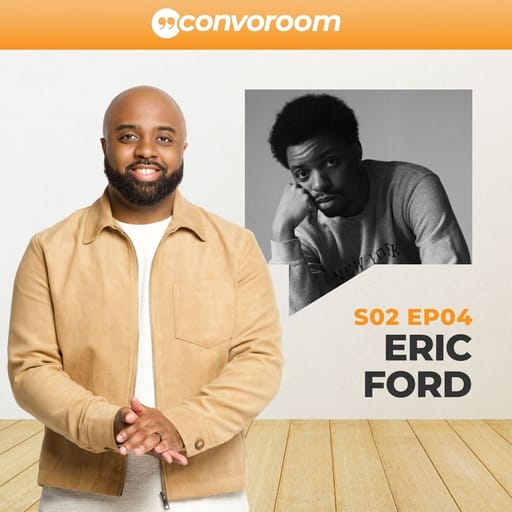
Transcript 0:01 All right, family. We got Eric Ford in the Convo Room today. 0:05 I am so excited for this conversation because, you know, every now and then you need to be able to geek out on marketing or all things marketing, all things content, and Eric just has a bright, bright mind for just seeing what's happening in the marketplace. 0:22 He has a resume that rivals any marketing person that you probably connected to on your LinkedIn. 0:29 Uh, but beyond that, in the few moments that we've, uh, gotten to talk before this recording, I can tell that he's a great person as well. 0:36 So, um, with him being a champion of so many other people, I cannot wait to champion the great things that he's doing. Eric, welcome to Convo Room. Hey, nice to be here. Yes. So look, let's just get into it. 0:50 Explain to people who have no idea what integrated marketing is, who have no idea, uh, what somebody like you does behind the scenes to connect brands and their audiences, what is it that you do? Yeah. 1:06 So it's funny 'cause I don't have a particular title. Maybe it is integrated marketing or maybe it's integrated comms. I've seen so many things, you know, there's so many different job titles out there. 1:15 But essentially, what I do is being able to bridge the gap between consumer, creator, influencer, and brand. 1:23 Um, I normally do that through a communications lens, so whether it is through brand comms and PR, um, influencer marketing, um, the newest thing that people are all about is community and brand advocacy. 1:35 Um, and then even through like social impact and things like that of that nature though too, I've been finding ways to bridge those gaps for consumers to really see what brands are doing, not just through their product, but how they invest in the community around them as well. 1:49 So that has been like my journey through all the roles I've had, um, and it's been kind of a great experience. Yeah. Awesome. I, uh, I'm curious, how did you find your way into this space? 2:02 Uh, did you always wanna do it, or did you kinda just stumble your way into it? I think it kinda started when I was in seventh grade. 2:12 Um, I always knew that I wanted to be a writer in a form of just telling stories, and so from then, seventh grade into on, I was like, "I'm gonna put myself in writing programs. I wanna be a part of the newspaper. 2:23 I wanna do news. I'm gonna be a part of the, um, yearbook," things like that nature. So I did that in middle school, high school, even college, I was getting paid and I was the managing and fashion editor there. 2:34 But in that time in college, I started to stumble upon social media, and what it means to create content there and the short form of writing and what that looks like for copy, and I was like, "I think I'm falling in love with this a little bit more." 2:46 Also, I thought I was gonna be a writer at Vogue. I'm clearly not a writer at Vogue, but that was just the dream that I had. Yeah. Yeah. 2:52 Um, coming from, coming from Houston, Texas, so I-- when I fell into social media, I was like, "Oh, this is such an untapped market to really do the cool things that I'm already doing with telling stories, but now I can do this in a visual setting, and I understand, like, how to bring some aesthetics and moods together." 3:08 Um, and that, along with the writing I was doing, I think that kind of propelled me to a new format. 3:13 Um, at that time, influencer marketing wasn't even here, so I was doing work with, like, brands and kinda bringing them close to bloggers who were, like, the, the OGs of being influencers. 3:24 Um, they had super impact in working with PR, um, spaces and, um, publications and stuff. And then it just started becoming a thing that I did all these things at once, and I was really good at it. 3:34 But I think it really came from my foundation in journalism, my foundation in creative writing. 3:38 It kinda sparked, like, this thing of how to really tell brand stories and what does that look like, and then kinda cultivate into a digital space as well. Mm. 3:47 So I feel like a lot of people who are trying to find their way through the creator economy, they really have those building blocks. 3:54 You know, they may not have formally gone to school for journalism, uh, have a background in marketing, but they love telling stories. Yeah. 4:04 And whether that leads you to, you know, doing marketing, doing film, or whatever the case might be, there's something about telling a story your own way that hooks people in, that, number one, it, it allows people to be seen, but also I think it provides an opportunity for companies who are serving the same audience to really have that symbiotic relationship to where, you know, supporters can... 4:29 I mean, creators can be supported- Yeah... uh, because of the audiences that they reach. And so with your experience with, uh, influencer marketing, I'm really curious, how do you find con- well, not even content. 4:43 How do you find creators that you feel like, "Hmm, this is somebody that I need to tap to just get involved with this particular initiative or this project that we have going on, because they can really help us reach who we're trying to reach?" 4:57 Like, how-- W-what do you see? What do you notice? What are the signals that you pick up to say, "I gotta reach out"? Yeah. Um, for me, I, I'm a person that likes to own his own things. 5:09 So because of that, I understand what things might look surface and what things actually look like, this is something to talk about. 5:16 I think there's so many creators out there, the world is very saturated, and, you know, they're all doing the same things. 5:22 We're doing get ready with me, so talking about our top five products or things like that they do, and I think those things are great. You know, those are surface level content that anyone can create and anyone can make. 5:32 What makes the content worth it is how you tell that story of tho- your first five products. Why are these your, um, first top products? 5:40 Why are you wearing the things that you're doing when it comes to your get ready with me? 5:43 Some people now are doing get ready with me, but then they're telling a totally different story that has nothing to do with the clothes or nothing like that. 5:48 But people are in tune, but they're also watching the clothes that you're wearing as well. 5:51 I think it's people who know how to go deeper than the surface and start exposing who they are, being a little bit more vulnerable. 5:59 And it's not you gotta tell your deepest, darkest secrets, but it's allowing people to come in to see who you truly are and the things that you care about. 6:06 Even if the story that you're telling is fiction-And we all read fiction books, we all love fantasy, you know, but it's something that captivates people to be a part of something, and I think that's the best thing about it. 6:16 When your stories and the things that you do are able to create an ecosystem, something that makes people wanna fall in and sit down and watch, that is what's gonna captivate, and I think that's what I look for in creators though too. 6:26 People who are telling unique stories that are filling in gaps that people are not talking about, owning a lane that m- people might not think about, or they're doing something that people might be like, "Oh, this is not it," but for some reason, I have a knack for seeing that as well. 6:40 You know, I have a knack for seeing something that's special, um, in somebody else though too, and I don't think it's something that everybody has. Uh, I, I'm boast about that. 6:49 So, you know, [chuckles] it's something that I use a lot, and I say, "I can see this now." I know these other people can see this, but I see this. 6:56 It-- But it, it has always worked in my, um, it's always worked in my benefit, but also worked in the brand's benefit that I worked with before though too. 7:01 So, you know, it's just seeing what is out there or the potential that what someone can do, and then cultivating that in a way for them to be their best selves as well. So yeah. You know, um, that really... 7:12 I, I wanna double-click on that because I feel like somebody hearing that, you know, it, it's very easy to hear like, "Okay, we, we wanna go beneath the surface." Yeah. "We want to own a lane." 7:26 And I think we might picture that, especially I, I can just think about so many times when I was early on like building a newsletter and, you know, when you try to, um, you try to pick a niche and you really commit to it, and then you realize later on you're like, "I need to pivot 'cause this really isn't me." 7:45 Yeah. And you really find you, you finally find your voice- Mm-hmm... and that is the thing that resonates and, and you realize that. 7:53 For me, it was when people started replying and saying, "Hey, like this really like hit with me today," or, "This is exactly what I needed to hear." 8:01 But sometimes on social media it takes a while to get that traction, uh- Yeah... 8:06 especially if you're, if, if you're starting from zero or if you really don't necessarily have a, a base of support a-already, and then if you try to then monetize early on through brand deals or brand opportunities- Mm-hmm... 8:20 it can be like you're just shooting in the dark. 8:22 So like, give some examples of creators, I mean, even if you wanted to name check some people, like that are really inspiring to you or people that caught your attention and why. Yeah. 8:36 So there's, there's like, there's a couple that I really love a lot. 8:41 I'll, I'll say I'm like a little bit more friends with the, um, um, with the like fiance, the wife of more of the show, but her name is Skylar and her, her newly fiance is Olutemi. 8:52 They are amazing because their foundation of the content that they create, um, is, is like rooted in their love with each other and how they, um, kind of champion each other in a way, but then they're also are able to have their own pieces of content separately, and you can still feel that love and support that is there. 9:13 Um, but also they're so creative and imaginative and know how to create a world in the space that they're able to have. 9:21 You know, they transform their apartment, they go to studios to change these things, and I know that could be also a, a privilege, but it's about the mindset that they have and the story that they tell, the things that they do, and how they tell that story, and it feels like an embellished like world of fantasy, but it's, it always feels like that it's rooted in something that is, um, conversational, something that people want to respond to, as you said. 9:44 But also you can tell that they know who they are as well. I think, you know, it's two-way street, you know. 9:49 People can love the things that you do, and they might comment on it, but if you don't, if you as the creator don't feel it, then ultimately it's not going to work. So it has to be both. 9:57 It has to be something that brings people in, but you have to also believe it as well. 10:01 Um, and once you believe it, then the content feels better as well though too, because it, it, it exudes that confidence, it exudes that space, and I know it's, but that energy thing matters because if you don't have that energy, then no one's gonna gravitate to your content or they're gonna be there for a small time, but they, they won't be there for a long time, I'll say. 10:25 Mm-hmm. Uh, for some reason, I think we might be having some connectivity issues, but I still can hear you very well. Can you hear me? Okay, good. So we're just gonna keep going. Okay. Uh, and it's coming back. 10:38 So I really wanna take what you said and like almost like just take a different vantage point because we're talking about creators and individuals. 10:49 I think a lot of the people who probably are following you on LinkedIn and, you know, people that I'm just kinda starting to see respond to content even on the platform, they are people within organizations, and they've gotta figure out how to get that know, like, and trust factor to a consumer brand, or sometimes even, you know, it, it might be a brand, but you might be new and it's a startup and you're trying to, you know, disrupt and do something different. 11:17 How do you feel like people can be authentic in connecting? Because I mean, you've got experience both through social at, you know, smaller outfits, through legacy brands. 11:29 Like how would you approach now, like as someone within a company to say, "Hey, this is how we're gonna build community," or, "This is how we're going to really just cut through a lot of really competitive creative out here"? 11:44 I mean, you know, I think everybody's creative now. Everybody's using AI, everybody's doing the thing. Um, so if you 11:51 are sitting at the helm of a new campaign, what's the first thing that you're looking at to do to really engage people?Yeah, I think first is always looking at the data first. 12:03 Um, it's one, understanding how campaigns have played in the past, um, and looking at those metrics and seeing what has worked, what hasn't, what do we want to improve upon. 12:12 Um, and then it's also paying to the metrics of the thing that you're trying to tap into now. Every campaign's not gonna be the same. 12:18 So you have what happened before from a, um, from a brand standpoint of, okay, this is what we did, this is what we, we voted into, and now we're trying to get into the new space. 12:27 So what's happening in this new space right now that we can really talk about, that we can own as a brand? What does the metrics say about this? What do, what are the audience and viewership within there? 12:37 Um, and then comparing that to who our true audience is, and does our true audience, you know, resonate with these things as well though too. 12:43 And then I think that gives you the foundation to know, like, this is where we should go. But I think the second part is not only knowing data, but it's also being a part of culture as well. 12:51 You know, there's people that are at brands that they say they tap into culture, but really you see this, you go to this place, you do something with it, and then you leave. 13:01 Tapping into culture is more than just using something for your one campaign. It's embodying that throughout your brand for longevity, and consumers and viewers and readers know that. 13:14 So they can see if they, if you dip your toe into something and come back. 13:17 You know, a lot of people use the-- And this is so, oh, this is so long ago, but, like, when Miley was, like, in her rap phase, and we all love Miley Cyrus, I definitely love her, but there was a moment in time frame she decided to dip herself into Black culture. 13:32 And when she said, "Oh, well, I'm about to leave now," everybody was like, "Oh, I-- We thought you was here to stay." But it shows how people- Yeah. 13:40 You know, I think it, it's, in layman's terms, it really shows how, you know, you just tapping into something and then leaving when it's beneficial for you is not how you're supposed to do certain things. 13:49 You know, a brand's supposed to tap into culture that aligns to who they are because then that means that you're doing it organically. It's something that has to happen organic for your brand to work. 13:58 That's how you find the right creators, you build the right, um, you build the right content, um, and you foster the right community, uh, all at the same time. Yeah. I think that's really sound advice. 14:09 Um, there are a couple of things. You know what? We're gonna double-click because I feel like the conversation has to be had, and it's Black History Month. Okay. It's February. 14:19 So we gotta talk about tapping into culture and the downside of the exit because I think there are cautionary tales now, uh, and I think Target is definitely one of them, where it, they-- I think there's so much potential when brands embody the sentiment of a community. 14:45 I, I, I recall early on when Target was really engaging a lot of, like, Black founders and Black businesses. Mm-hmm. 14:53 And I think it really gave a sense of visibility, um, 'cause, I mean, I think back in the day, I don't know if you felt like this when you were a kid, uh, I remember my, uh, my mom would, like, shop for hair products, and she would go, uh, to certain, you know, beauty supply stores- Mm-hmm...and this and that. 15:11 But it was almost rare when you would go into like, you know, a large, uh, you know, your run-of-the-mill store and to be able to find products that are specifically made with you in mind. 15:23 Fast-forward- Mm-hmm...and Target makes this bold move to say, "Hey, I mean, you don't have to 15:31 scrounge around town to find the latest and greatest, and actually we'll introduce you to- Right...some of the latest and greatest creators." 15:38 And then I think the lack of acknowledgement for the pivot, I think, among other things, I think they've weathered a few storms, but- Yeah...I think it, the trust factor among, I'll just speak for the Black community 'cause I'm a, a member of it, uh, [chuckles] but you know, I feel like the trust factor took a major hit. 16:01 And yes, I think they're gonna have a Black constituency that's always gonna shop at Target, but I don't think the relationship in terms of being tapped into the culture is the same. 16:13 It doesn't mean that it can't be repaired and can't be worked on- Yeah...from a brand perspective, but I think that it's just different now. 16:22 And I think that there's something to be said about if you're going to enter in or tap into a community and you're not fully bought into it, there is a price to pay for the exit. 16:36 And I think that it's, it's easy to jump on the bandwagon with something and adopt the hashtag or, uh, you know, just jump in the flow. Mm-hmm. 16:47 Uh, so with that said, how is it that you would advise even creators- Mm-hmm...who might find themselves wanting to align with brands, and they might find themselves at a crossroad because they're saying, "Well, you know, it, it seemed like this was a, a good move in the beginning, but now I'm having to choose between, okay, well, I gotta make money. 17:15 I gotta, I, I gotta do these brand deals." Um, but at the same time, there might be a misalignment, not just culturally, but th-there might be misalignment in terms of expectations. Yeah. 17:27 How should creators going a- go about understanding that relationship with brands? And if, let's just say, there isn't alignment, how should they go about exiting those relationships without paying a penalty? Yeah. 17:45 Uh, it's such a complex conversation because, you know, when you become more of like a paid collaborator with a brand, you know, certain things shift and change, especially if you are a full-time creator and this is what you do for a living. 18:00 You know, it's like a parent working and, you know, they hate their job, but they want to, you know, and they want to leave, but technically they can't leave because they got obligations. 18:07 Like, you know, I-I understand that plight a lot, and it's very difficult to make decisions. 18:13 And, you know, if you're not in those positions, you don't, you know, and you don't have to deal with those things, it's easier for you to, for you to say, "Oh, just leave," or, "Just do this," or whatever though too, you know? 18:22 But one, I definitely wanna hold grace for people that are trying to figure out what that exit looks like. 18:27 Um, for me, when it comes to working with the creatives I wanna work with or even brands that I want to connect with and do certain things with, first, I'm really doing my research, and I'm doing it down pat because in today's age, you never know who's giving their money to who, who's doing what to what, um, what have they done in the past. 18:44 And so one, I always vouch for creators to do their research before they reach out to any brand. 18:48 A brand might look great on paper, they might look good in social, they might even partner with your favorite creators, but that doesn't mean you know what's happening on the back end. 18:56 So doing your research and learning about what your br- what the brand is doing first and understanding what avenues they're taking, talk with people that worked with them before. 19:04 I-- Even when I'm interviewing, I talk to people who are, um, who I'm interviewing with, but I also talk to people outside of that as well. I need to know what your relationship is. 19:14 And yes, do I go to some of the Black people first? Yes, because I gotta know what's happening with my experience, okay? I have to find that out first. 19:20 But then, you know, hey, other people can say one thing, and then you talk to that Black employee, and they... something else is happening, okay? But, uh, I, I do my due diligence- Right...on purpose. 19:32 A- a- you, you have to sometimes because, like, you know, there's times when you feel like things are happening, and then when you talk to somebody, then you realize, well, you're like, "Oh, something is different. 19:40 Something has changed," or something internally is not, it's, it's not happening. But, you know, you're not gonna know that on the outside in. So it's always doing your due diligence and, um, and doing your research. 19:50 But also though, too, you know, if you're already in this space, and, you know, brands can say one thing to you and get you on board, and then, like, things change. You know, and brands could be in the beginning 20:00 supporting and, you know, care about this culture and things like that. And, you know, as we know, there's been layoffs, there's been things like that. That means new CEOs are coming in, new people are switching out. 20:09 They might have a different idea, and honestly, that's where I thought what happened with Target, 'cause Target, it kinda just came outta nowhere that they were like, "Oh, we're not supporting this no more." 20:17 And I was like, "Since when?" We also... There's things that have happened where, you know, like, a lot of people on a higher level have left or 20:25 different, um, ideas or whoever has power now has changed, you know, though, too. 20:29 So, you know, it's, it's a difficult thing, especially for Black employees that were working there in retail and just in corporate, you know. 20:35 Um, and I know they're doing their best, but I, I can't hold them responsible for making decisions for a brand that is making, what, 20:42 so much more money that, you know, and they're, they're not even in the rooms of making these decisions and choices. 20:47 So it's about doing your due diligence, but understanding if you need to leave, then being professional about the leave, but also stating why. I think it's also important to be realistic and be honest. 20:57 "I'm leaving because of certain things are not aligned with where my brand is. I thank you for the time that we have had, um, but this is now where I feel like that we might need to, you know, depart." 21:09 Also just pay attention to your contract as well. When you're able to do that, what does your contract look like? What do your re- usage rights look like? 21:16 Um, you know, if you need to put in your clause that I can separate at any timeframe, do it because that's gonna be able to get you out of your thing. 21:24 Sometimes it's hard for content creators to get out of contracts because, you know, there's certain guidelines and legalities that are there, and they might-- something might happen in March, but you won't be able to get out till September. 21:34 You know, certain things just happen. So I was gonna say, just be cautious of that. Pay attention to your, um... Do your research. Do your due diligence. Pay attention to the, the, um, contracts that you have. 21:45 And then when it's time to make that clean, you know, break, make that clean break, um, respectfully. But, um, be honest about it as well. Yeah. I, um... One, you're such a wealth of knowledge. Like- Thank you. 21:58 [laughs]...I f- I feel like we could be on this call all day. Um, but I do want to pivot to... 22:05 I wanna talk about the relationship between, like, new creators and approaching brands because I feel like there is an expectation gap where, uh, sometimes as a new creator, you might feel like, "Okay, I've, I've got quality content. 22:24 Uh, my, my metrics are metricing. Okay, w- we're, we're on the rise. We're, we're doing the thing. Um, but because I haven't reached certain benchmarks, I, I may not be on the radar. 22:37 Or even if I pitch, I might not be attractive to, let's just say, a Fortune one hundred, Fortune five hundred company who's, you know- Yeah...doing brand campaigns or what have you." Um, 22:51 what should they be expecting in terms of benchmarks within their metrics to know, "Okay, I'm, I'm ready, number one, to be approached by a brand, but also I'm, I'm ready to pitch, and this is the value that I know that I can bring based- Yeah...upon, uh, my following or based upon the base of support that I have online." 23:13 Like, h- h- help negotiate that expectation for new creators. Yeah. Um, you know, the... I think the crazy thing is that I don't think there's a number. Like, there's no particular follower count. 23:26 There's no particular type of, like, like, particular KPIs. 23:31 I mean, I would definitely say, like, you need to have some type of reach, some type of impression, some type of, you know, like, um, way of cultivating, um, community to have conversations and comments and things like that. 23:42 I think that's like a baseline. But, like, I don't think there's a particular number. Like, you don't need to have fifty comments on every, on every post. That's just not realistic. 23:51 Um, and then we're also living in a world of nano and micro creators as well though too. So you can have two thousand followers but still be useful to a brand in a certain type of way. 23:58 So my thing is that to throw all that out the window. Your metrics doesn't matter. 24:03 It's good to have them, to show them, but what you really want to do is show how you align with that brand and how that brand al-aligns with you. Mm-hmm. 24:09 What is important to youAnd how are you able to tap into what the brand is doing or tap into something that you see the brand could be doing that they're not doing yet, but it still falls in line with what that brand guidelines are. 24:21 And you're not gonna know exactly. You don't work in long-- you don't work in that brand, so you work-- you're speaking from the outside looking in. 24:26 But again, if you know how to figure out how to cultivate community, how to really create original content that is authentic, you're gonna-- it's gonna be easy for you to bring those things together. 24:35 And if you bring something to them, they might have a different idea, but they can see your passion, they can see how you align. So speak out and start reaching out. 24:45 I don't think there is any moment or time frame that you need to do it. I do think, though, you need to know who you are as a creator. 24:51 You need to know what lane you want to own or what lanes you feel like that you can own. What is the things that you wanna start talking about, and start talking about it, and you have to start. 25:01 You know, you can't be like, "I have zero followers, and I wanna start working with this brand right now." You have nothing to show. 25:07 But I do think that when you have already started doing it, and you have something to, um, bring to the table, shoot your shot. 25:13 Brands are looking for anyone that is in-- Right now, people are looking for brand storytellers at the end of the day. 25:18 If you know how to tell a story, even if you have the potential and you don't have the audience yet, and someone sees that in you, they're going to wanna find a way to work with you. I've done that plenty of times. 25:28 I've saw somebody organic content, I'm like, "Oh, I gotta write this person down because sooner or later they're gonna blow up." And sooner or later, they did. 25:34 Even if I work with them or not, I'm watching, and I'm still learning about who is out there, and brands are doing that, influencer marketers are doing that. Um, community managers are watching what's on the platform. 25:43 So reach out, start talking, do what you need to do, know what things you wanna start talking about, see how it aligns with that brand, and shoot your shot. You never know what could happen. 25:53 You know, you can get free gifting. You can even get affiliate link. You can... You know, there's ways to start. 25:59 You know, you don't have to look at what the big creators are doing or like, "I just want a brand partnership, and I need to get paid." 26:05 Yeah, we all need to get paid, we all need to do something, but it's about starting and building that relationship. 26:09 Start the relationship, build the relationship, show them what you can do, and then those things are going to continue to happen. And I think that also happens on the brand side. 26:18 If I wanna work with someone, I'm gonna start building a relationship with them. I'm gonna organically get them because I want them to know about our brand. 26:24 Or if they already know about our brand, I want them to know that I'm paying attention to them. Yeah. "Oh, you used this before? 26:30 I'm about to send you this and this and this, and something little, something on the side that you've never seen before as well." 26:35 So I'm gonna show them that I'm paying attention to you, and now we're continuing to build that relationship into something that can foster into a paid partnership, paid branding, you know, us working together, you coming to my events, and now, you know, you're able to create all this organic content, and we're working together. 26:49 You know, you get perks from the brand that most people don't get. Like, that's how brands, you know, typically work. That's how I've always created it. 26:56 I just started talking and relating and creating content, and I got connected with certain brands that continue to send me products now. And on the flip side, I'll do the same thing with them. 27:06 But, you know, it's really about finding alignment and going for it, not about the follower count, not about this, not about that. It's do you have the tenacity to do it? If you do, reach out. Mm-hmm. 27:19 Speaking of reaching out, are there any reach outs to you that you felt like, oh my gosh, like this really caught my attention? Like, or something that's really stuck with you with how- Yeah... 27:30 a particular creative reached out to you? Um, I'm a naturally goofy person, as you can tell. So like if, you know, someone comes to me and something is funny and a joke, I'm like, "Oh, I love that. 27:42 What else should I know? You know, what-- how can I get to know you more?" Um, but I'm always okay with a generic reach out as well too. 27:48 You know, creators don't know us, so, you know, if they're reaching out to, to partner with us, and they're being strategic and professional, especially with Black creators who sometimes we are not always being chosen, I totally get it. 27:59 I think it's making sure that you're showing some heart, showing, you know, your creativity and your authen-authenticity through this as well. I think that really matters as well too. 28:09 You know, if you can tell your story through what you're reaching out for, "Hey, my name is this. I've been talking about these things. I've gotten some notice in here and here and here. 28:17 I'm trying to talk about this, and this is what I'm looking for to partner with you," easy. And if things align and they make sense, then I'm gonna reach out regardless, so, you know. 28:25 But I think it's, it's always good if you can figure out who the person is and what the things that they like and things like that, and know how to like twist your angle up to really talk and, you know, relate to who that person is. 28:36 I think that's always, um, better as well though too. But I, I think these are things that we can learn from like even interviewing for a job. 28:42 You're interviewing for a job, but you know who you're supposed to talk with next. 28:47 You do that research to understand who they are, what things have they done, what things, you know, have they talked about, and how you can relate that into your conversation. 28:54 So I think it's all just like one giant interview of you presenting yourself, for you all to really build like connection and see like if it works or not. Mm-hmm. 29:03 Now, one thing that I know, you, you are tapped in to what's happening on the platform, so that means you're seeing advice about creators, the creator economy, influencer marketing, all the above. 29:18 What is the worst advice that you are hearing that you're like, "If I only had a microphone, I would tell people, 'Please stop listening to this.'" What would you say? 29:29 Oh my God, that's a lot because there's a lot of things I hate that people say. But [laughs] 29:34 uh, but one thing I, I'm not liking right now that I'm hearing people talk about is influencer marketing is dead, because I think it's not. I think it's just evolving. 29:42 Um, and I think because a lot of marketers work in a world of absolutes, and I think that has been the biggest issue for a lot of people. You know, when something changes, they're like, "Okay, we gotta be all in on this. 29:52 All our eggs is on this now. We're not-- we're forgetting this now." But I think that's not, you know, technically true. 29:57 I think influencer market-marketing is changing, um, into something different that it didn't used to be before, and I think that's okay. It's still new.So it's still here, it's not dead, it's just shifting a bit. 30:08 You know, when we have this growth of community-driven things and affiliate marketing and utilizing brand advocacy to, like, build more things, influencers are now becoming more of our spokespeople. 30:18 They are becoming our VIP and clientele. You know, we see, we see creators now at the Grammys that just happened. I think that's really cool, and that's amazing. 30:27 But now, you know, you're-- they're being seen as symbols of voice and expertise instead of like people that are just creating content that can fill, you know, your platforms and also spill, you know, like, um, brand awareness and, um, and brand lore as well too. 30:43 And I think that's-- those things are two different things. So, you know, I think people are going in all on community, but it doesn't mean that you have to leave what's happening in influencer marketing. 30:51 It's just how you tap into it and how is it evolved and how does your brand involve with it. So maybe it's less influencer partnerships. That's fine. 30:58 Everyone doesn't need-- You don't need to pay twenty people five hundred K, you know. But maybe it's fewer people to be utilized as your spokesman people, and that can be tapped into every position. 31:08 Uh, when I was at my old job, we had a global ambassador program of, um, amazing doctors that created content against aesthetics and clinical skincare, and they came from all over the world. It wasn't that many of them. 31:19 It was less than ten people. You know, and we are a large, um, global brand that's in thirty-seven, like, countries and markets. We don't need thirty-seven people talking about-- 31:29 the right people talking about the right things that can be utilized against all of our different channels. 31:34 So not only just in a influencer sense, but they're being used in e-com, they're being used in retail, they're being used in marketing campaigns that can be utilized and pushed through paid media, or, um, they can be used through sparking and, um, boosting and whitelisting and all these different things. 31:48 So, you know, these are the people that are your faces, and then, like, your community are people that are filling your brand advocacy and brand love, and they're your word of mouth. 31:56 They're your peers, um, talking to another peer and building community in that, in that space. So, you know, everything has its place, but I don't think it's dead. 32:04 And I think, I think it's misleading and disingenuous to say that it's dying when all it's doing is evolving and changing to something new now that we have more things that are happening within the creator economy. 32:14 But yeah, that's just one thing though. I mean, I have a lot of other takes, but I'll save the podcast for that [laughing]. [laughing] Look, y'all, uh, first, before we go, I wanna make sure I shout out Eric Ford. 32:27 He's a-- I found you on LinkedIn, but where are you most active? Where can people find you? Yeah. I mean, I think I yap a lot on LinkedIn. Um, so I am there, so you can find me there @ericford. 32:39 Um, also I have Instagram, so you can follow me @ranger_up. 32:44 I'm a huge Power Ranger fanatic, so you-- if you know who I am, you'll see it all there, but that's normally the biggest spaces that I'm on, um, at the moment timeframe to find me. So last question. I really wanna know 33:00 for you, 'cause you're, I would say, I would not be surprised if you headed for, like, a huge career pivot at some point because I feel like your transferable skills, like you could do anything. 33:14 And so I'm curious to know like where do you see yourself in the next five years, ten years? And I think I got one more question about legacy after you answer that question. Yeah. Um, you're right. 33:29 Uh, I, I do have a lot of transferable skills. I worked in a few different industries, like in media and entertainment. I worked in fashion, um, and beauty. There's different things that have happened, but-- 33:40 and throughout the same skills that have been transferable through all these things. I think in the next five years, uh, I like working in corporate America. I definitely don't see myself being DIY. 33:49 I call it freelance DIY because it's, you gotta do it yourself. I learned from experience, DIYing is not for me. 33:56 But I think in, um, in corporate America, I definitely am reaching for to be either a CMO, so a chief marketing officer one day, or a chief communications officer just because of the skills that I have and the things that I see. 34:08 I think I have a unique and fresh approach to marketing, what things look like and those are the space I wanna be in because I also think that there are spaces of impact internally and externally. 34:17 You know, my job is not only just to be known as an expert, but it's also be able to create pipelines for people that look like us and to bring them along on for the journey. 34:25 Um, especially being from Houston, Texas, there's not a lot of us that are in these spaces coming from HBCUs and all that. 34:31 So, like, I wanna be in a position of power so I can create impact, not only for our consumers, but like for people to look, look like me to be in the spaces that I'm in now as well. So, yeah. Yeah. 34:41 So in that, I feel like you kinda leaned into it. So what do you feel like? 34:45 Because we're sitting in twenty twenty-six and it seems like, uh, I mean, it's February third today when we're recording this, and, um, I think Black history, you know, growing up, 34:59 there was so much that felt like there was lit-- I mean, people, yes, they laid their lives down literally, uh, for the cause to advance, uh, civil rights for Black Americans, but it seems like there is now a cultural advancement that is necessary for people. 35:20 Uh, and it, it just looks different. It, it, it feels like it, it looks different, it feels different. It does not feel passive anymore. I don't know if you feel the same way. 35:28 Um, and so I wonder like what does Black excellence, what does legacy look like for creators and creatives who look like us, who are... 35:40 'Cause I, I don't think that just advancing Black excellence or Black history means that you are Black and Black alone. I think it means just being tapped into who you are and taking that wherever that leads you. 35:56 Um, at, at least that's, I guess, my definition of it. But I'm, I'm curious for you, like what do you see the legacy of, uh, someone like you? 36:04 Like if you reach that CMO spot, if you reach, um, what-whatever you're envisioning in the next five years, um, ten years, um, what do you feel like your legacy, what do you want it to be? 36:17 And, you know, if you could like paint a picture of what it looks like, like what would it be?Yeah. Um, I wanna be someone that shows that professionalism doesn't have to look in a certain type of way. 36:32 I've learned even being at these bigger brands that there's concern-- there's so much work politics that are involved in. I get why certain things are the way they are, but it's just not the type of person that I am. 36:41 You know, like I love working in a corporate environment, but I don't want to be stuffy. I don't want to be a cog. I don't want to transform and like convert myself to what the company is. 36:51 I wanna be in a space that we're cultivating spaces for people to be who they truly are, because I think that's how you produce the best outcomes, um, available, you know? 36:59 And so that, that is always want to be my legacy, people tapping into who they are and utilizing that to do whatever they want to do, whether it is in freelance or contracting or in the corporate world. 37:10 You have to find a way to make these things work for you, you know? 37:14 Even with people who just wanna work just to work, and then they wanna fuel every-- anything that they got to going on, so they should have the option to do that, and what does that look like? 37:21 And we shouldn't have to be, um-- We don't have to-- shouldn't have to keep our mouths closed to live a life that we want to live or be the things that we want to be. 37:29 So for me, that is going to be my legacy, and I think it's already, it's already been that, helping people find who they are, seeing white spaces that they've never seen before, having the real conversations that people are not willing to have, um, and, um, and being a yapper about it. 37:45 And honestly, just not giving a, a, you know, an F. I don't wanna curse 'cause I'm actually a F cursor, but, um, [laughs] You did really good. You did good. I did really well. 37:56 I am, I'm-- I mean, that, that is also part of my legacy, but it's also 'cause, like I, I don't mind calling out BS when BS is there. Like it's never my thing to allow things to be what they are. 38:06 I think we, we continue to allow things to be what they are and to tiptoe around stuff. I feel like that you are also a part of the problem, and I never wanna be a part of a problem. 38:14 I always wanna be a part of a solution or someone that's adding something to a conversation that's going to not only advance it but provide new perspectives as well, too. 38:23 So that, that's always my, um, that's always the thing that I want to tell people. But I, I want that to be my legacy as well. 38:29 Someone that did not care about your rules or your regulations or how I need to be in this world. I'm gonna be who I wanna be, and I'm gonna make it who I wanna be because it's already been working. 38:38 And me being myself has gotten me to the places that I want to be. I'm not gonna stop now, you know? And I want you to stop either. So that's, that's, that's the nice way, I'll say [laughs] Yes. Of me saying that. 38:51 Well, thank you everybody for tuning in to this episode of Convo Room. I'm so grateful for Eric Ford for coming through. And, uh, look, you can find us on-- I'm on LinkedIn. I'm on Instagram. 39:03 I'm on everywhere you can find me, mostly active on LinkedIn these days because I think, uh, that's where my community is, and I'm just building as many relationships as I can, and I'm so glad that Eric is a new friend to the show. 39:15 Man, I appreciate you so much for coming through. You can-- You're welcome back anytime to yap as much as you want to. [laughs] And, uh- I love it. 39:23 We'll bring the bleep button if you, if, if, if you're feeling froggy and ready to leave. [laughs] I'll definitely let you know for sure. [laughs] Yes. All right, man. Thanks so much. All right.