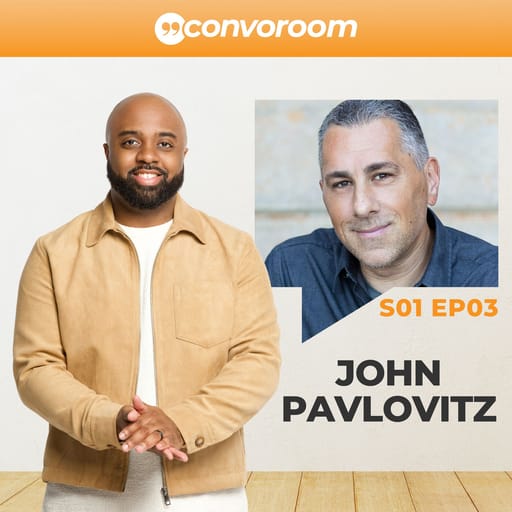
Transcript 0:00 Well, here we are. It's episode three, and I have a great guest for us to talk to today. His name is Pastor John Pavlovitz. He's a writer, a pastor, and an activist from Wake Forest, North Carolina. 0:14 He's a 25-year veteran in the trenches of the local church, and, uh, you just gotta meet this guy. 0:20 He's committed to equality, diversity, and justice, both inside and outside of faith communities, and we get into it in this conversation. 0:30 I first found out about him from his blog, Stuff That Needs To Be Said, and, uh, he was so gracious to sit down with me as he was releasing his new book, If God Is Love, Don't Be a Jerk. 0:41 Without further ado, let's welcome Pastor John Pavlovitz. [upbeat music] All right. So number one, I gotta thank you for joining me on the podcast today. 0:57 I ran across your blog first. Okay. And I was like, "This guy..." I- I mean, the title of your blog literally is exactly how I feel. It's like- [laughs]... Stuff That Needs To Be Said. Okay? 1:11 [laughs] So, uh, you gotta walk me through, what was the inspiration behind saying the stuff that needs to be said? Well, you know, the... As the blog was just beginning, I was a pastor in a local church. 1:24 We were part of a mega church there. And I was just writing for... It was an insider sort of a blog for parents of teenagers, for other youth pastors who were sorta looking at our church as a model, right? 1:36 And what I was finding out was that I was softening my language because of the nature of the, of the position, that I... There was things that I really wanted to say but I knew I couldn't go all the way there. 1:49 I could kinda tiptoe up to it. I could, uh, talk around things. 1:52 And I started to realize that I needed to speak with specificity, and there were some things that happened in our country, uh, one of them was the Sandy Hook shooting. I remember the day that happened- Mm... 2:03 I was sort of writing from a really visceral place. Um, at the time I remember there were some conservative pastors and politicians who were sort of leveraging that moment in a way that I thought was really damaging. 2:15 And I wasn't thinking about my job as I was typing away, and I put that blog out, and it reached a whole new audience. 2:21 And I realized there was a responsibility I had to speak clearly into issues of sexuality, race, g- gun violence, immigration, all these things. 2:31 So I knew I was probably gonna be an authentic pastor or an employed pastor at this particular church. [laughs] And so I pre- Ah... proceeded to see if I could write myself out of a job. [laughs] Yes. 2:45 So I mean, let's, let's just explore that for a second. You say, "Hey, I'm either gonna be an authentic pastor or I'm going to be an employed pastor," based on where you are right now. I think- Mm-hmm... 2:58 lots of people might find themselves at a spot where maybe their, uh... what's authentic to them and their convictions and what aligns with their- Mm-hmm... 3:12 um, just their outlook, w- what they feel like God has assigned them to do, doesn't match with their vocation, even if it happens to be in church. What do you say to those people? 3:22 Because that's like it's an identity thing. It's- Mm-hmm... I mean, sometimes people, whether you've gone to seminary or whether you've been to church all your life, or- Yeah... 3:31 whether you've just decided to just, you know, give your life to the call, it's like, "Hey," like, "this is a big part of who I am." Right. How do I navigate this space? 3:43 Well, and Mark, it isn't even just, you know, vocational Christians or professional Christians, uh, or ministry people. 3:50 What I found was as I started to express myself more clearly, that the pew sitters, the civilians in the church were saying, "Okay, that's me. The writing has given me permission to ask some questions-" Mm... 4:03 "that I didn't think I could ask or speak into things I didn't think I could speak into." 4:06 Because there is a, what I call a conspiracy of pretending in church communities, where you can be honest, but you know that you can't be completely honest because there will be things that might push you to the periphery of the community. 4:20 And that, that need for community is so strong, and n- that identity that you get as a person of faith in that context is so powerful that often you'll do anything to stay in there. And so that's what I found. 4:32 It was also just normal people saying, "Wow, I can sort of exhale and begin to explore these things and feel that it's okay." Mm. So obviously you've reached a whole new audience of people. I mean, I'm just- Yeah... 4:48 you know, a random person in Denver, Colorado, you know, just stumbling upon your blog one day. 4:55 Um, what weight and responsibility do you have, especially for, uh, people who might not be churched, but, um, they've got a little baggage around church- Mm-hmm... 5:06 they're apprehensive around church or just faith in general. How do you reconcile having these honest conversations that are directed toward the faith community, but then also you're still a pastor- Mm... 5:18 so it's like that evangelism aspect will never go away. That's right. And I, I tell people all the time, if you're honest in doing this work or just as a person of faith, morality and conscience, 5:32 uh, I'm always fighting with and for my faith tradition. So there are things about it that I, I love. There are beautiful things that I have been a part of. I've had a front row seat to just amazing things. 5:43 So I want to hold onto those things, and I want other people to experience that. But I also know the toxicity associated with the institutional church and the baggage that is attached. 5:54 And so I'm always trying to jettison what is unhealthy and hold onto what is redemptive. And that could look a million different ways- Mm... for people. 6:02 And so I never want people to feel like they have to agree with meTheologically or politically, it's about moving people from where they are to a more honest place, and, um, that means confronting some really ugly realities, especially for myself as a cisgender, white guy, I had to realize, okay, this thing that I'm a part of has been doing so much damage that I need to reckon with that and the ways that I've benefited from that system. 6:28 And there's a grieving that comes with that, and a lot of people don't wanna do that work. 6:32 So I'm always asking the church, especially people who might look like me, to, to do that work, have that existential crisis- Mm-hmm... have that struggle. Mm. Do you find that it's a hard conversation? 6:49 Because I wanna say, like, in my experience from... I've been in pretty much, like, I would say multicultural or, uh, multiethnic environments depending on- Mm-hmm... 7:01 um, how embracing certain environments are, um, for, I mean, the majority of my life, like since college, and I find that f- for as much progress that I think we've made- Mm... 7:15 there's always, like, this, this moment where you're like, "Oh, we're here?" [laughs] Yeah. You know what I mean? Yes. Like, so I wonder what it's... 7:23 I, I just wanna know, like, sitting at a table with somebody who looks like you, like- Mm... what is that conversation like when you're breaking down that struggle? 7:32 Because just like how we talked about identity earlier, I think a huge part of this conversation is the identity that comes with, you know, being conservative, being a Christian- Mm... 7:45 and all the things that come along with it that are definitely more cultural than Christ. Right. 7:50 But I'm sure the conversation has to be interesting if you're talking to especially a friend that knows you and you know them, and y- you know the, the, the, the unfiltered comments that might happen and come across. 8:05 Like, what is- Right... that conversation like? It usually goes better interpersonally than it does in a more collective way, like online, right? It's usually far less, um- Always. [laughs]... you know, bombastic. 8:19 And, you know, I... So that's, there's that part of it. But I think I had to realize when I'm engaging a lot of these people, I understand the story that they're coming out of. 8:27 I understand the theology that they're steeped in. Uh, I know the narrative in their heads, and I know what they're taught they're supposed to believe and how they're supposed to vote. 8:37 So I represent the, you know, I represent a danger. I'm the backslider. I'm the heretic that they always heard about. And so I realize- Mm... 8:45 that there's a defense posture that they're gonna have toward me or anything that I'm saying. 8:50 So, so there comes a responsibility to speak clearly, but to have a, as much, um, mercy as I can to realize that they're still in the story, so they can't really see the flaws in it, uh, very well. Mm. And to... 9:03 Because to see them would be to, this whole house of cards has to, uh, has to fall apart. And, um, you know, I say that organized religion and organized crime are very similar. 9:13 You know, when you're in the family- [laughs]... you're really loved fiercely. And then the moment you step outside of that, y- you know, you're concrete shoes, right? And so you gotta b- be- Yes... very careful. 9:24 The ferocity of that community that is beautiful also gets flipped. And so when I began writing all this stuff and saying it, members of my old community now see me as the enemy, and that's the sad part. 9:37 That minute you ask questions, those questions are threatening. Mm. You've just walked through... I mean, I was just on your blog earlier this week just reading about your experience in the hospital. Yeah. 9:49 I wonder, the work that you feel called to now, like, on this side of a surgery that could have almost taken your life. Mm. 9:58 Something that hit me with the, the last thing you wrote on your blog was, uh, most of the stuff that we, uh, feel like we're, are important to us in terms of our work, we don't even think about it when we're thinking that we're dying. 10:08 Yes. How has your recent experience impacted your work and the stuff that you're writing? 10:13 I think for me, what I'm always trying to do in this work, I, I speak a lot to ministers, caregivers, activists, parents who are really exhausted on the front lines of empathetic work of any kind, and I'm always trying to make sure that they are doing the work that they're doing in a sustainable way so that they're looking at their lives, you know, a, a, a life of sustainable compassion, I call it. 10:37 And so I think what that did, it reminded me of my own journey, that I have to be a whole human being doing work that I believe in, but the work can't en- encompass my life. I can't do this work- Mm... 10:49 in detriment to my relationships. And so there's a balance that I try to get other people to have, and now I was reminded of that. 10:56 But the other thing it does is it tells you that there is an urgency to this life, and so you have to use the day and time that you have in front of you as wisely as you can. So I just- Mm... 11:07 have to keep doing what I'm doing, and then, you know, try to make sure I'm loving people close to me. See, the challenge is, Mark, I always want people... 11:15 I want my wife and my kids and my friends to go to my messages when I talk to people so that they can say, "Yeah, he actually lives this," or, "He's full of crap," right? So I wanna be able, there, how they- Mm-hmm... 11:26 they are the ones who determine how authentic I really am despite anything that I preach or say or write. Mm. I wanna rewind the tape to the moment that you were still a pastor. 11:40 May not, may not be as authentic as you were, uh, or as you are now. Um, because I think there are, there are times when we all have to muster up that strength to say, "This is my conviction." Yep. 11:54 "This is what I, I strongly believe God has for me in my life." Um, but you may not have had the courage always. 12:01 I want you to just describe what was the conversation like in your mind when you, if you ever second-guessed- Mm... that type of conviction you have now?I think it, a lot of it is work that you do retrospectively. 12:16 You look back and you realize, "Okay, I was trying to be honest, but I had... I was aware of limitations. I was not verbalizing it or internalizing it that way." 12:25 Um, there were a couple times when I realized, okay, I'm writing this message, and I wanna speak on something that's a really difficult topic, and I'm actually beginning to picture faces and names of people in my congregation who I know are gonna be upset by this message. 12:38 I know where they sit on Sundays- Mm... and I know how involved they are in the church, how vocal they're gonna be. And so you begin thinking about them and writing almost to placate them. And so that is exhausting. Mm. 12:50 And it's also, it's exhausting to get up in front of, at the time, a couple thousand people on a Sunday and be speaking something assertively, and yet in the back of your mind saying, "I'm not quite sure I believe this, but I know I'm supposed to." 13:03 Mm. So it's more of an internal wrestling that, it's a general discomfort because there's a duality that's there. 13:11 And the more you can be one person o- the same person on the platform that you are in your living room, the better you are. So it was trying to bring those two people sort of together. 13:22 So it was just a gradual getting exhausted of softening the words or hiding the convictions. And finally you just say, "I can't do it anymore." [upbeat music] What's up, family? 13:36 We're taking a quick pause from this episode to make sure you're connected. If what you've heard so far has been helpful to you, I want you to know there's plenty more where that came from. 13:47 But it's easy to miss an episode if you're not connected, so please head over to convoroom.com to find out how you can subscribe and not miss a single moment. Now back to the episode. 13:59 [upbeat music] Hm, gotcha. 14:08 Is, was there any specific conversation or fallout where you might think back and say, "Ah, I wish I could've handled that better"? Hm. That's a great question. I think it, it happens all the time to varying degrees. 14:25 I... When I was in this large church that we were speaking of, I was really well loved, and I had relational capital. I had been there a long time, so I knew I had an equity of trust with people. 14:36 And then I went to a new church. I left that church and started at a new church and thought that I had... 14:42 I knew I didn't have the same equity of trust, but I sort of ignored it, so I went in all guns blazing, you know, being as straightforward as I'd always been at the previous church, and not realizing they were not ready for that. 14:54 They had not bought into me as a human being yet. So probably I could have kind of walked with them and built some of that trust, but at the time, I'd already been speaking so clearly that I, it was hard to go back. 15:08 So that, that's always gonna, that was a challenge. And then I always tell people- Mm... 15:12 after five months, I heard God calling me to leave that church, and it came in the form of my pastor's voice saying, "You're fired." 15:18 And so it was in that moment [laughs] that God- [laughs] Like, it wasn't in my quiet time. It was at a Starbucks on a Thursday afternoon where he's like, "You're out." Yes. 15:27 And then it was, and then it was, "Okay, this is the reality now, despite how I got here. So now what?" And that began this whole new journey for me about seven years ago. 15:38 So in terms of you being an author, was that the thing that you saw as the next step for you? Or- Mm... did you just kind of think, "I'm just gonna write organically, and whatever happens, happens"? That was... 15:52 You know, writing was not on the map at all. The only time I had written was to prepare messages for speaking, and then I was writing a blog. But again, it was still sort of just this... 16:03 I thought as just a between me and a few people, and even though it was slowly growing. And I wrote a blog post not long after I was fired, and it went viral, and I was, uh, invited to write a book. 16:14 And it, I had no idea. You know, they, they s- this publisher called, and they said, "We love this post. We'd love for you to turn it into a book." And, um, they said, "Just give us a book proposal by this date." 16:23 And I said, "Okay, that's great." And I hung up the phone, and I googled book proposal because I didn't even know what that was. And then I did this- Oh... 16:31 proposal, and they passed on it because they realized that I, I was, I was gonna be even more, uh, bold than they thought, and they were just, like, a Christian publisher. Hm. And so all these publishers passed on it. 16:42 And then finally a publisher said, "We wanna publish this as is. We believe in it." And I said, "Okay, well, let's do that." 16:48 And that did so well that the ripples began of going and being invited to speak and write another book, and it's just been totally unexpected. Uh, this was nothing that I... I had no plan at all after I was fired. Mm. 17:01 It was just about getting up every day, speaking as honestly as I can into the world, and care for people, and that's led to the next day and the next, and here we are. Mm. 17:13 So what was your experience like leading up to writing this particular book that you're releasing? I'm curious as to what inspired it. Um, how'd you, how'd you get the concept? Like, just all the above. 17:27 Well, I, you know, I did a book proposal [laughs] for this book, and it was originally called Unboxing God, and it was, had some of the similar themes. 17:35 It was about, you know, when you shrink God and the, the effect on your life and theology and how you treat people. And, but I started writing it in March of 2020. 17:45 And so this little news story about this health issue in, in China was, you know, burgeoning, and then it's- [laughs] Just a little... on the states, and then it just... [laughs] Yeah, so I've got my head down every day. 17:54 I'm writing. I'm paying attention. And then this thing starts to grow, and the news becomes more dire and more alarming. 18:01 And then the summer, you know, we start seeing the, the high profile murders of Black people and the protests, and then the counter protests. And then we have all the election stuff ramping up. 18:11 And I started to look at all this and say, "Okay, one, I can't ignore-This, it can't be just a sidebar in the book. And because that's what I've always done is speak explicitly into what's happening in real time. 18:22 But I also looked at all these situations and realized most of the, uh, division and most of the violence seemed to be coming from Christians, professed Christians who were white. 18:32 They were the ones refusing masks, and they're the ones who were protesting against the Black Lives Matter movement. They were the ones with the inc- incendiary rhetoric toward immigrants and all this. 18:42 And so I said, "I have to speak into that." And I didn't think I could write the book anymore, and I went to my publisher and they were fantastic. They said, "Well, what book could you write?" 18:50 And it became this book, If God Is Love, Don't Be a Jerk. And it was my effort. Mm. 18:54 It became like a real time journal of all of this stuff through the lens of my faith, and, uh, a much more visceral and much more emotional book, I think, than I would've written previously. 19:07 Do you feel like your assignment or life's work is to speak into the narrative and kind of interrupt the pattern? 19:18 Or do you feel like your goal is to just live authentically and hope that you inspire others to change? 19:27 What, what you learn doing this work, and a- anyone who speaks or writes or puts anything out in the world, any opinions, is that you're gonna release these words, and those words are gonna do 1,000 different things in 1,000 different people. 19:40 And so I learned long ago- Mm-hmm... that I could... I have to choose the words as carefully as I can, and ask myself what I'm actually attempting to say here. 19:48 Am I trying to educate or am I trying to put somebody on blast? Am I trying to s- you know, show them- Mm-hmm... a truth or a experience they haven't seen, or am I trying to humiliate them? 19:57 But if I have my motives in check and I put those words out as carefully as I can, I let those words do whatever they're gonna do. To some people, those words are gonna- Mm... 20:06 bring comfort, and they're gonna say, "Someone sees me." Other people are gonna be threatened by those words, and I'm gonna have to be okay with all of those responses. 20:14 So I just get up every day, I have this platform that I'm grateful for, and I say, "What is, what is the wisest use of this day and these 800, 900 words?" And I live with the rest. Mm-hmm. I have the, the, the- Mm... 20:26 praise and the criticism, and I just hold them loosely and just keep saying, "Okay, what am I intending? Where is my heart?" Um, I, number one, I just wanna 20:37 just applaud the fact that I'm j- I feel like I'm, I'm looking at somebody that seems to put to paper and put voice to so many, like, thoughts and feelings that are- Thank you... just in the faith community. 20:51 Um, and it's just hard to articulate. So I, I- Mm... just really wanna affirm you for that. Thank you. Um, at the same time, I can't imagine having walked through what you just walked through. So, like- Mm... 21:05 just if you don't mind sharing, what was the experience like when you realized, like, "Okay, I'm gonna have to have some surgery on my brain." Yeah. It's literally like... 21:17 I mean, there's, there's probably no more intimidating thing to digest than, "Okay, we're gonna have to operate," and not just on something, but the most important faculty you have. Right. [laughs] So, um, 21:30 what, what was that process like? Like, how did you, how did you get the news, like all the above? Well, the, the news came slowly, and what it allowed me to do is mentally prepare for every option. 21:43 So I was having symptoms. I had had COVID, I was a breakthrough case even though I'd been fully vaccinated. And I wasn't feeling really well after I had sort of recovered from a lot of symptoms. 21:55 And doctor did some blood work and he said, "Oh, there's some hormonal stuff that's really out of whack and it's really strange, and it might be this type of pituitary gland tumor at the base of your brain." 22:05 And so, you know, he said, "But don't be scared." And so which I was already scared, right? So he said, "I'm- Mm-hmm... gonna have you... We're gonna do an MRI on your brain, but don't worry." Which I was worried. 22:14 So we did the MRI and I knew, okay, it could show up that these are there. And then there was a variety of things that could happen. 22:21 So once they found that those tumors were there, it was about going back to a specialist, doing more blood work, and the choices were, "This tumor is not... 22:30 We're not gonna do anything about it because it's not harming anything. It's, it's benign. Um, we're gonna give you meds," that was the other option to treat this, this other particular kind. 22:39 And the third kind was, "Well, we have to do surgery because it's totally messing with your system." And unfortunately, we got that news. Mm. 22:45 Um, I was reassured that most likely the surgery wouldn't cost me my faculties, that maybe the- Mm-hmm... uh, anesthesia would be in my brain for a while and I might be foggy. 22:57 And, um, fortunately, I just realized, okay, this is... I have no choice. This is the road I'm on. Surgery is not optional. That sort of released me to say, "Okay, I'm gonna invite everyone into this, all my readers. 23:09 I'm gonna talk about it, and we're just gonna walk through. And if things go horribly wrong, hey, they're gonna buy more books after." [laughs] I said, you know, to my wife, "There'll be a book... 23:18 We get a great book bump, a death bump if I die." Um, but it has been beautiful- Oh, my God... because people who I... You see the connection that you have with your readers. 23:29 And I know this virtual community is powerful, but it's been palpable to see the way they've carried me and sent letters and- Mm... sent encouragement. 23:37 So that, that gave me comfort to know no matter what happens, I'm walking this road like every other road openly and honestly. And so it's been fantastic, and I am glad that I'm semi-coherent on most days. [laughs] Yes. 23:51 So you write about on your blog, like, I think it was, like, this past week if I'm correct, or I read it this week. Okay. But, um, just this incredibly intense event that happens. Mm. 24:04 And the thing that got me was you talked about how... 'cause I guess the doctor was like, "You're not supposed to have any fluids," and, like, all this kind of stuff. Yeah. 24:11 And then all of a sudden you feel there are fluids and you're like, "Oh, my God, this is blood." Yeah. Like, what is going through your head at that moment? 24:19 Because it inspires this awesome post where you're talking about things that you think about when you die or when you think you're gonna die.Thank God you're still here Yeah. Yes. Um, so like it's... 24:30 I'm, I'm just curious as to the play-by-play. Yes, there's what's happening in the room and to get you stable and all this- Mm-hmm... good stuff, but like what is happening in your head? 24:44 You know, it- things change so quickly in, in, in a moment in life, and we know this, and I was just sitting in bed. I'd ordered some dinner. 24:51 My wife had been in the hospital room all day with me and I said, "You know, why don't you go home? The kids are getting home from school." And I, I was feeling a lot better. 24:59 I was moved from the ICU to a regular room, so there was sort of this optimism and like we're, we're through the, the hardest part. 25:06 And, you know, she put on the TV, ordered dinner, and then it was just having this like little cough and little tickle, and all of a sudden, within like 10 seconds, it's just your blood is streaming out of your nose and everything. 25:18 Mm. It's all over the floor, and you're c- you're coughing and gagging, and your ears are filling up with fluid, and you can't hear. And I hit that, you know, call button for the nurses, and it was just this panic. 25:30 And you had people surrounding you, and what you hear yourself, you hear the, your voice speaking sentences that you're not controlling. I'm just saying- Mm... "Call my wife." And I kept saying, "I need my kids. 25:41 I need my kids." And that's where you just say you're desperate for just more time. And I think we find that out- Mm... in difficult moments is that that's w- all we have, that's what we want is more time. 25:54 And then if we get that time, can we be wise with it? So ever since then, it's about I got that time. I got to see my wife, I got to be with my kids, I got to see my friends, my family. And so yeah, don't waste it. Mm. 26:06 It's funny 'cause I lost my sense of smell. It's been coming in and out, and I said- Mm... "I can... I'm s- I'm stopping and smelling the roses every day. 26:13 Even if I can't smell them, I'm just appreciating-" [laughs] Yes... "the days," you know? Yes. 26:18 I f- for some reason I feel like we have to talk to people who might be listening who that whole like, "I just want more time," resonates with. Mm. 26:29 But it might be a little difficult to re-engage in relationship because even if it's not like how we were describing earlier, like with a, a philosophical or theological disagreement that- Mm-hmm... 26:46 you might have with someone, sometimes it's just relational. Right. And how do you live life and repair relationships that might not be the healthiest of relationships, but they're necessary? 26:59 How do you get to a point where you're not in regret at the end or if, God forbid, something catastrophic happens? Right. Um, but at the same time, you're kinda living a little guarded. 27:09 You're like, "I, I, I need these boundaries because I feel like these boundaries help me stay grounded, stay emotionally-" Right... "stable," you know? What would you say to those people? 27:20 You know, doing this work, I mean, that is the theme. It, over and over as I... You know, before the pandemic, I was traveling the country, and now virtually. 27:28 It's the relational fractures out of this time, people who are no longer speaking to friends or people whose marriages have crumbled or their moms, uh, over politics, theology, whatever it could be. And so 27:43 it's a balance of saying, "How do I try to preserve this relationship?" 27:48 I do what I can to do that, but at some point there becomes a, a, such a toxicity to that that maybe the distance is where I have to love those people from, and you have to create a new, uh, tribe of affinity. 28:01 You have to create new community. 28:04 So I think that that regret that you speak about or the fear of, "Okay, I've got this time, but I still have these profound disconnects with people," it's every relationship is so unique and it so ebbs and flows. 28:16 There are people who I'm now trying to reconcile with who maybe eight months ago I could not, right? I was not ready for that. 28:23 And there are other people that I still don't want in my life presently because proximity with them is more harmful than good. 28:31 But I do have friends and other family and a new community, and so you invest in those relationships. You might be doing life with people you didn't think you would be 10 years ago. 28:42 The people you thought were gonna be there may not be the people who are all gonna be there, and you have to be willing to be okay with that. 28:50 Is there specific language that you could give somebody in their back pocket when they're trying to navigate one of those conversations when they're like, "Hey, proximity is a good thing." Mm. 29:05 Um, I, "I need to repair this relationship if it's not beneficial for us to have fallen out over the fact that- Right... you voted for someone I didn't agree with." Yeah. 29:16 Um, or, "Over the fact that you have a different stance on something that I f- I feel is so core to who I am and what I believe." Right. "But at the end of the day, we're better together than we are apart." Yeah. 29:32 What is it that you could give to say, "Hey, when you're sitting down with this person, this is what you need to focus on. This is... These are the questions- Mm-hmm... you need to ask. 29:42 This is what you can say to find inroads and find ways to repair." Yeah. "You may not be able to fix everything that's fractured-" Right... "but this, this is what you can say." 29:54 I, I remember being in, in art school, uh, years ago, and I, I tell the story in one of the books where the professor was gonna have us draw a still life of just ordinary objects. 30:04 And he said, before we, before we even started, he said, "Put your pencils down." And he said, "I want you to come up here and get close to all this stuff." 30:10 And he said, "This is ordinary stuff that people no longer notice the beauty in. Your job as an artist is to show them the beauty that they're missing. 30:18 And the way you do that is you have to become a student of what you draw. You have to pick it up and look at the way it reflects light and what its temperature is and whether it's smooth or rough. 30:27 And then when you, when you become a student of that, you can show people the beauty that they no longer see."And I think it's about being a student of other people. 30:35 When you're a student of other people, you're always saying, "There's more I can learn about them." Mm-hmm. 30:40 I may think I know them really well, but I don't know something about them because I don't know their full story. Because if I do, it may change me. And I look for the fear and the grief underneath that story. Mm. 30:52 Whatever people are afraid of or whatever they feel they've lost or will lose, that usually tends to push them to the things that they, that they believe and speak and how they vote. 31:03 If I look for the fear and the grief, that's universal stuff, and if I can see where that is, maybe I can help them, not to change their mind, but to make them less afraid or to comfort them. 31:14 And if I have that posture, I'm gonna be a better human being. Mm. That's good. The fear and the grief. Wow. Um, what do you find people are most afraid of? 31:31 Probably of be- they're, they're afraid of being alone. So they're afraid of, you know... 31:36 The movements that we have in our country, you can look at something like the sort of MAGA movement that seems [laughs] on the outside to be so toxic and angry. 31:45 But people, for whatever reason, found a sense of place there. And I don't know how or why, but I do know that that's the reality. 31:54 And so I think everyone's afraid of not being within a community, and so they need to find that. And then the religious part of it is the toxic religion. 32:04 People are terrified of going to hell or, or God being angry at them, and it's amazing what you'll, what you can do to people when you manipulate that fear. 32:14 And so I think when we talk about the kind of religion that we've been talking about, there is a, there is an unhealthy terror at the heart of that, whether it's God is gonna be angry at me or I have these adversaries who are coming to take my jobs or whatever it could be. 32:30 Yeah. At some point you had to wrestle with this. Hearing the whole like, "Is God angry at me?" 'Cause I grew up very Pentecostal. Okay. Mm-hmm. 32:40 And um, and I think one of the indictments on the Pentecostal movement can be the whole like if then, uh, paradox. It's like, "Well, if you do this, then God is gonna..." You know what I mean? Mm-hmm. 32:50 And, and so you can get to a point where you equate how good or bad your life is with your relationship with God. Right. And is he pleased with you? Did you, did you do all the right things? 33:07 Did you, did, did you read your Bible? Did you, did you, did you give in the offering? Yes. Did you pray? D- uh, all the, all the above. And I think 33:19 these are subtle things, but it definitely comes back to this thing where it's like, "I, I just don't wanna make God angry." Mm-hmm. 33:27 And I think what is so profound for me is that the moment that I had a child, it erased a lot of those... Like, I mean, the... 33:37 I definitely got over it sooner than having a kid, but having a kid really like erased- Yes... a lot of the nonsense of the if then paradox. Because 33:48 there are days where, like, my daughter, I remember when she was first born, like, she just, uh, she was kinda up every two hours. Mm-hmm. And then she kinda had the acid reflux thing going on. Yeah. 33:59 So it was just like... I mean, and, and we were like new, I mean, first time parents, so we didn't know what we were doing. And there was just... Well, I didn't know what I was doing. 34:08 [laughs] My wife definitely- You're right... kicked into high gear. I hear you. But, [laughs] um, but there was this moment where it didn't matter how, like, because she's a baby, she's gonna do things- Mm-hmm... 34:19 that babies do. And it didn't matter how upset, frustrated, whatever I was, as soon as she went to sleep, I'm like staring at this little baby. Yes. Because I'm like, I'm fascinated with this little child. Yeah. 34:36 And so there's no way, there... It's almost like the Psalms, like, "There's no mountain high enough, no valley low enough- Yeah... no river wide enough to keep me from getting to you." You know what I mean? 34:45 I can fuck with that. So how... [laughs] So it's like, how in the world could I ever wrestle with the idea that if I believe what I believe- Mm... 34:56 that God would send his only son, and that he would be the firstborn of many brother- Mm... 35:01 and that I'm now an heir with Christ, and I'm a, adopted into the family, how in the world could I walk around with this concept- Yeah... that God is mad with me? 35:13 But I wonder like, what was that like for you when you came to that realization like, "Wait a minute, God's not mad at me." 35:20 It, a lot of it was, uh, a really similar experience because I was raised with the narrative of God as Father, we're the children of, of God. And, and the... 35:30 So I started to think about my child, my son Noah, when he was born 16 years ago, and realized if, if I were to say that he's gonna reach a point where he does something where I cut him off and, or I want him to suffer, I want him to be in pain, what would that say about my character as a father? 35:49 And yet a lot of the narrative was, hey, God is out to squash you, and God is gonna reach a point where God washes his, at the time, hands of you, and you're, you're done forever. 36:01 And so there was something that didn't connect with that, just the love that I have for my son, as imperfect as a dad as I am, I was, I'm relentless in my love for that child, for my children. 36:13 And so that began that sort of shaky understanding. And I, and I think what you talked about earlier was this thing that we try to psychoanalyze God to say, "All right, this happened, so is God angry? 36:24 Is God trying to tell me something?" And we, we s- we insert ourselves into circumstances, and we try to spiritualize every circumstance. 36:34 And what you can do is you can drive yourself insane, uh, because, uh, people would say, "Oh, you found this tumor because God wanted you to find this tumor that's... 36:43 You had COVID so you could find this tumor."Okay, if that's what you feel, great, or they go, you know, "God gave you this tumor so that you could do these things." 36:51 And I said, "Well, I don't know why God gave me the tumor. I know two things: I have the tumor, and now I get to respond with the best of myself." Mm. So I, I can't worry about what, the whys of this. 37:04 I only understand the what and now the how. Mm. How am I gonna be? So I think when we do that, we're gonna be better off. And, um, I think, yeah, God... 37:12 For, for God to be God, God has to have a love that we can't even fathom. It's always gonna out-forgive us, out-love us, out-care us. Mm. What does the next chapter for you look like? 37:26 I mean, yes, you've got a book- Sleep... that's [laughs] one word. Sleep. Ah. Other than sleep- Yeah... does that mean, like, does that equal rest? Mm. Does that equal intentional Sabbath? What does that mean? 37:44 Yeah, I... Well, part of it is, you know, I, I laugh because really I've been, I've started going on social media here and there. 37:50 Usually I would pre-schedule posts and I'd say, "Hey, here's an update on my health this morning," but everything you see is gonna already be scheduled. I'm not online. 37:57 And then I started to kinda creep in and do some things, and people were saying, "John, you have to go and rest." And I said, "Really? 38:02 Honestly, I'm s- kind of tired of sitting in this chair or lying in the bed, and I'm feeling well enough to participate in life to some degree." You know, there's a lot of restrictions. Mm-hmm. 38:12 So I, I joke about sleep, but honestly, um, next for me is really I'm leaning into those ideas of grief. 38:20 I mean, that's where I'm feeling led to write, into that fear and grief story even more, and help people with the, the losses that they have and the people that they've lost, right? 38:30 But also the relationships that they've lost, or the idea that they may have lost their understanding of God or the church or America. And so that's probably where I'll be. But for... 38:41 The good thing now is because of the surgery, because I have limitations on physically what I can do, I've got three or four months probably where I'm gonna be here, and that's been good- Mm... 38:51 practice for me, because as wonder- as much as I've preached self-compassion and self-care and rest, I've been pretty terrible at it. Mm. So this has- Mm... 39:00 been a way for me just to say, "Okay, this is gonna be this time now, and I'm gonna, um..." I'm trying to sh- model wise recuperation for people. Mm. So 39:14 for someone who is like me, who does, has a hard time practicing Sabbath, um, what would you tell them? Because it's just like, hey, I'm, I'm preaching it, and I, I know all the things- Yeah... but I, I suck at it. 39:30 Like, w- what would you say to someone like me? It, it's a funny question, but I always say to people, "Who do you think you are?" 39:40 [laughs] So the, you know, the, one of the self-care tips I give to people is know who you aren't. 39:46 So you're a once in history, never to be repeated creation, and you have gifts and talents and abilities that no one has ever had or will have, but you're not inf- infinite and you're not, um... 39:58 You know, you have a shelf life, and you have a capacity that gets p- you know, maxed out. 40:04 So part of it is having the humility to say, "Okay, I know that I have all these gifts and talents, and I wanna do a lot with my time, but I am also perishable, and I have to care for this body because the goal is not me expiring early, the goal is for me to be here as long as I can to do this work." 40:21 So it's know who you aren't. You know, have that balance of humility and gratitude for who you are, and, um- Mm... resting, because that was my story. 40:30 I was going into the surgery and I knew on this date, I'm gonna be out. I'm gonna be sedated, and everything that happens over the next four hours, and then the ripples of that, I can't control. The world is gonna- Mm... 40:43 still go on. People are still gonna do activism and beautiful things and fight for justice. I had to d- call time out, and then I get back to it. So we all need that time out. 40:52 Hopefully it won't take you being in surgery, right? [laughs] Yes. Um, if you could foresee what the, "Well done, my good and faithful servant," would look like for your life... 41:07 'Cause obviously the work, it, it's never-ending, right? What does a, a completed work look like for you? I, I'd like to say... 41:19 You know, in the book I talk about that I used to identify with I was this kind of Christian, and that was my identity. 41:26 And so people have seen my theological search, my, you know, my, um, deconstruction or whatever you wanna call it, and they say, "So what are you now?" And I said, "I don't really care- Mm... 41:37 to describe, you know, what I am. I just wanted the how to be important. Was I helpful? Was I kind? Uh, you know, w- did I bring more compassion into the world or less?" Uh, so that's the work. 41:53 I'm not sure when it's gonna end, and, uh, I, so I wanna be interrupted doing something beautiful with my life. So that's, that's it. Mm. That's the success. 42:04 Hey, well, first of all, I just wanna say thank you for, uh, just taking the time to speak into so many sensitive issues of identity, issues when it comes to relationships and repairing those breaches that have happened- Mm... 42:23 especially over the last few years. I feel like this conversation hopefully will help someone be able to be authentically themselves, but find a pathway- Mm... to really bridge those gaps that have been broken. 42:37 Is, if, uh... I mean, obviously we've covered a lot in this conversation. Is there anything else that you feel like, man, if I, if there's anything I want people to know, I want them to know this. 42:48 Do you have anything else on your heart that you wanna share?I always tell people that there's power in your story and there's resonance in your voice. 42:57 You know, we're talking now, and there's nothing extraordinary about me or my story that isn't true of everyone else. Everyone has a story that merits books and people to read about it. 43:08 Um, so for me it was about realizing the only reason I'm here is because I spoke the truest contents of my heart, and those words found other people. 43:17 And so whether they end up writing books or having a blog or whatever, the story should be about realizing the agency that you have in the world and your circle of influence. 43:29 You have incredible power to do something redemptive, and so just to do it, um, to not, to not underestimate your capacity for a more empathetic planet. Mm. With that, we thank you for your time, sir. Oh. 43:44 And, uh, we wish you the best- Thank you... on your release. All right. Thank you, Mark. It was a joy to be with you, and thanks for the work that you do, and look forward to talking to you again. Yes, sir. All right. 43:55 Peace to you. [upbeat music] Thanks so much for listening. 44:05 It is such an honor to have you right here in The Convo Room: Conversations with Mentors, Moguls, and Legends hosted by yours truly, Mark Allen Patterson. Look, I don't want you to miss a single episode. 44:20 So can you do me a favor? Head over to convoroom.com to subscribe and find all the information you need to stay connected. Until next time, remember, you're one conversation away from changing your life for the best. 44:34 Have a great one. 44:36 [upbeat music]